Most European classrooms today bring together students who speak different languages at home, celebrate different festivals and carry different family stories. That diversity can stay invisible, or it can become a source of conflict, or it can become one of the richest resources a school has. Which of the three happens depends largely on choices made by teachers and school leaders.
This article explains what promoting cultural diversity in schools means, what European and international frameworks say about it, and which practical strategies work both in the classroom and at the level of the whole school.
What does it mean to promote cultural diversity in schools?
Promoting cultural diversity in schools means building a learning environment where every student’s cultural background, language and identity are recognised and respected, and where students learn to understand and work with people who are different from them. It goes beyond tolerating differences: it turns them into a shared resource for learning, through the curriculum, teaching methods, school policies and relationships with families.
UNESCO’s Guidelines on Intercultural Education draw a useful distinction here. Multicultural education uses learning about other cultures to produce acceptance, or at least tolerance. Intercultural education aims to go beyond passive coexistence, creating understanding of, respect for and dialogue between different cultural groups. Most of the strategies below follow the second approach.
Why is cultural diversity important in education?
The first reason is belonging. The Eurydice report Integrating Students from Migrant Backgrounds into Schools in Europe (2019), which covers 42 education systems, analysed data from the PIRLS 2016 survey: in almost all participating European countries, primary school students who do not speak the language of instruction at home report a lower sense of belonging to their school and say they are bullied by their peers more often. A school that makes room for their languages and cultures is addressing a real gap, not a cosmetic one.
The second is the competences all students need. The Council of Europe’s Reference Framework of Competences for Democratic Culture describes 20 competences that people need to live together as equals in culturally diverse democratic societies. Among them are “valuing cultural diversity” and “openness to cultural otherness and to other beliefs, world views and practices”, alongside skills such as empathy, listening and observing, co-operation and conflict resolution. These are learning outcomes for every student, not only for students with a migrant background.
What are the key principles to follow?
UNESCO’s guidelines summarise intercultural education in three principles. In plain terms, intercultural education:
- respects the cultural identity of every learner, through culturally appropriate and responsive quality education for all;
- gives every learner the cultural knowledge, attitudes and skills needed to take an active and full part in society;
- helps all learners contribute to respect, understanding and solidarity among individuals, ethnic, social, cultural and religious groups and nations.
A simple test for any activity follows from this: does it treat students’ cultures with dignity, does it help them participate, and does it build understanding between groups? An activity that only exhibits “exotic” traditions once a year usually fails all three.
How can teachers promote cultural diversity in the classroom?
Most of the work happens in ordinary lessons, not in special events. Some strategies that work across subjects and age groups:
- Start from students’ own experiences. Invite them to share family stories, languages, music or objects that matter to them, always by choice: no student should be made to “represent” a country or a religion.
- Use storytelling, drama and simulations. UNESCO lists storytelling, drama, poetry and song among culturally appropriate teaching methods. Role-play and simulation exercises let students look at a situation from another point of view, which is the core of empathy.
- Diversify the perspectives in your materials. In history, literature, science or art, ask whose voices are present and whose are missing, and add examples from different cultures with the same dignity and depth.
- Work with stereotypes openly. Help students notice generalisations in media, textbooks and their own language, and discuss where they come from. Teachers can start by reflecting on their own assumptions and expectations.
- Use cooperative learning in mixed groups. Structured group work with clear roles helps students who would not normally talk to each other build trust through a common task.
- Set clear classroom rules against discrimination. Agree them with students, apply them consistently and respond to every incident of mocking or exclusion, however small.
For a broader view of how these practices fit into an inclusive school, see our article on inclusion in schools.
How can the whole school support cultural diversity?
Classroom strategies last longer when the school as a whole supports them. Eurydice describes the “whole-school approach” as a collaborative approach involving teachers, school heads, other education professionals, parents and the local community. In practice, school leaders can act on several levels:
- Curriculum. Plan cultural diversity across subjects and years, so that it is not left to the goodwill of a few teachers or to a single “international day”.
- School environment. UNESCO gives concrete examples of learning environments that respect cultural diversity: awareness of dietary requirements, respect for dress codes and spaces for prayer or meditation. Signs, displays and the library can also reflect the languages and cultures of the school community.
- Anti-discrimination policy. A written policy, known by staff, students and families, with clear procedures for reporting and handling incidents of racism, bullying or exclusion.
- Staff development. Give teachers time and training to develop intercultural competences, share practice and discuss difficult situations together.
- The local community. Cultural associations, libraries and other local organisations can contribute to projects, events and learning visits.
How can schools value students’ home languages?
Language is one of the most visible parts of cultural identity, and one of the most sensitive. The Eurydice report found that it is very rarely a right for students from migrant backgrounds to study their home language at school: thirteen top-level education systems across Europe have regulations or recommendations on home language tuition. Even where there is no national policy, teachers can still make room for students’ languages.
Finland is the example the report highlights: there, all languages present in the school are valued and used, and the curriculum promotes plurilingualism and language awareness for all learners. Some ideas any school can adapt:
- welcome signs and short texts in the languages spoken by students and families;
- language portraits, where students draw and colour the languages that are part of their lives;
- allowing students to use their home language to plan, take notes or discuss before working in the language of instruction;
- inviting students to teach classmates a few words or expressions;
- reading and library activities with bilingual books.
How can schools involve families from different cultures?
Families are the first experts on their children’s cultures, and their trust makes everything else easier. The Eurydice report notes that around two-thirds of education authorities in Europe promote the involvement of migrant students’ parents in school. Practical steps include:
- clear, simple communication, with translated key information or an interpreter for important meetings where possible;
- meeting times that fit different working patterns;
- inviting parents to contribute to lessons and school events as people with knowledge and skills, not only as guests at a food festival;
- including families from different backgrounds in parents’ associations and school decisions.
Our guide to parent-teacher communication has more ideas on building this kind of relationship.
What mistakes should schools avoid?
- Tokenism. A single festival of flags and food, with nothing else during the year, can reinforce stereotypes instead of challenging them.
- Putting students on the spot. Asking a child to speak for “their” country or religion in front of the class can be uncomfortable. Make sharing an invitation, not an obligation.
- Treating culture as fixed. Students have multiple and changing identities: a student born in one country to parents from another may relate to both, to neither, or to something new.
- Ignoring conflict. Promoting diversity does not mean avoiding difficult conversations. Prejudice and discrimination need to be named and addressed.
From our experience at ELA
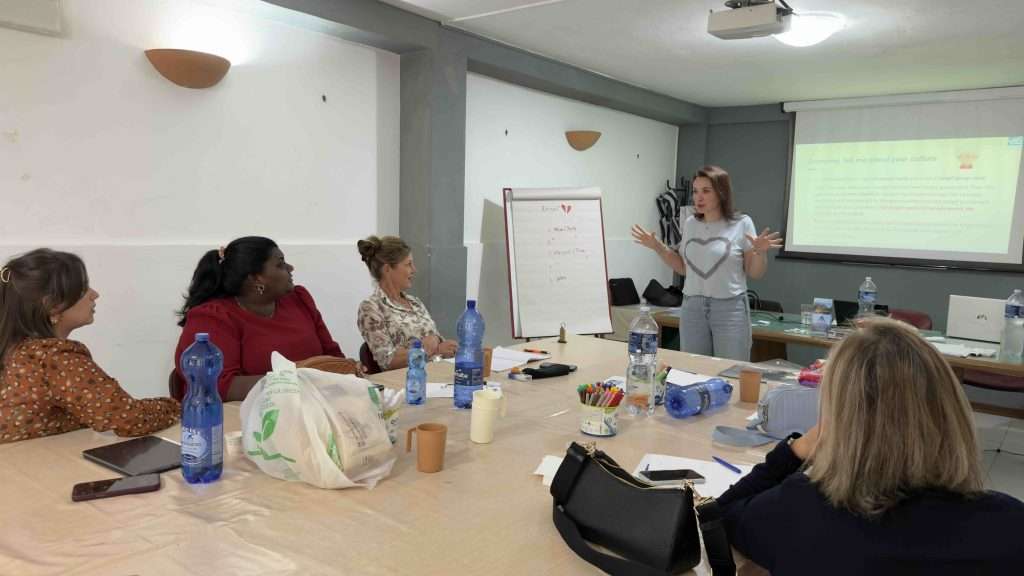
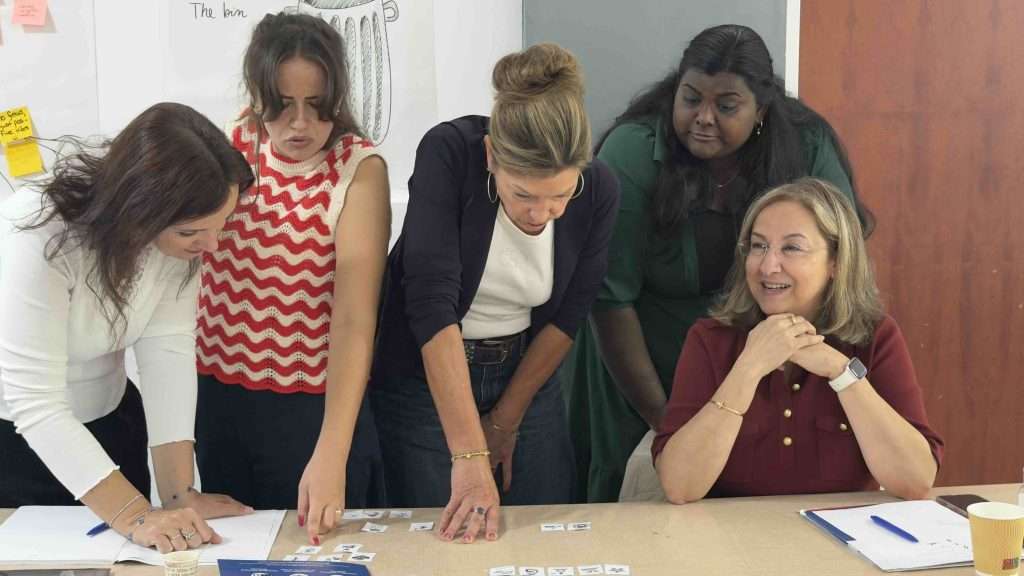
Our course Intercultural learning and cultural diversity in the classroom works on how stereotypes and prejudices form, on intercultural communication and empathy, and on the teacher’s role with newly arrived students, through storytelling, simulation exercises and non-formal activities that participants design and try out themselves. Training together with colleagues from other countries adds a further layer: participants experience intercultural dialogue directly. One participant wrote after the course in Palermo: “(…) the cultural activities and city tours in Palermo allowed us to fully immerse ourselves in the local culture and connect with other students.” (Luis Vives Martín, Spain). If your focus is prejudice and discrimination, see Diversity in the classroom: teaching tolerance and overcoming prejudices and discrimination, or browse all Erasmus+ inclusive education courses.
Sources
- UNESCO, UNESCO Guidelines on Intercultural Education, Paris, 2006.
- European Commission / EACEA / Eurydice, Integrating Students from Migrant Backgrounds into Schools in Europe: National Policies and Measures, Publications Office of the European Union, 2019.
- Council of Europe, Reference Framework of Competences for Democratic Culture, Volume 1: Context, concepts and model, Council of Europe Publishing, 2018.
P.S. A training course abroad is also a lesson in cultural diversity: a week with teachers from across Europe, funded by Erasmus+. Download our course catalogue to see all inclusion and diversity courses.
 English (UK)
 Español
 Italiano
 Deutsch
 Română
 Български
 Čeština
 Ελληνικά
 Polski
 Português
 Français