In our effort to prepare students for real-world careers and challenges and to equip them with 21st-century skills, we sometimes forget that, as educators, we also have the responsibility to imagine and build spaces where everyone can be creative and bring out the best in themselves.
The new edition of the course “Creativity for the future: promoting Critical Thinking and Problem-Solving in the classroom” took place in Tenerife from 01/03/2026 to 07/03/2026. The participants came from all across Europe, with Luise from VEdbBS – German school Sofia in Bulgaria; Rosalba from IC Livatino Ficarazzi in Italy; Filip from Obchodná akadémia in Slovakia; Alexandra and Sandra from Hraunvallaskóli in Iceland; Klára and Marcela from Gymnázium Český Krumlov in Czech Republic; Ivana, Romina and Silvia from CPIA “A. MANZI” in Italy; Stephanie and Franziska from Christoph-Graupner-Gymnasium Kirchberg in Germany; Maria Beatriz and Luísa Maria from Escola Secundária D. António Taipa in Portugal.
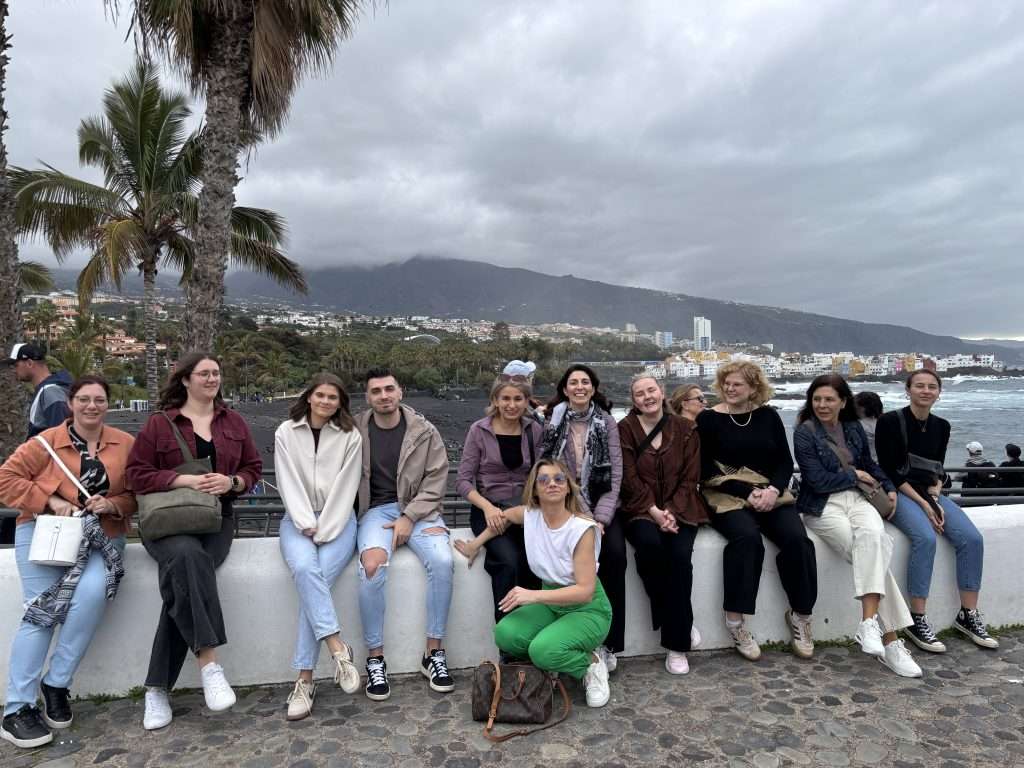
While discussing the key competences needed for life in the 21st century, participants explored learning and innovation skills, digital skills, and career and life skills, focusing particularly on the 4Cs: critical thinking, creativity, communication, and collaboration. Most importantly, through practical activities we discovered how our brain and thinking processes respond differently when faced with a problem to solve.
Participants were introduced to a series of challenges designed to help them reflect on how common obstacles to out-of-the-box thinking can be overcome by applying specific strategies. For instance, by using the 6 Thinking Hats method, they practiced “lateral thinking” and explored how it could be applied to topics they currently teach. Through individual work and peer feedback, it became clear that this approach can be used in any subject—from science to language learning—and can also serve as a formative assessment tool that encourages students to think beyond conventional limits.
Shifting to visual strategies, participants explored new activities aimed at stimulating students’ creative expression and supporting brainstorming and discussion of ideas. We also challenged the notion that visual thinking belongs only to the arts by presenting a more innovative and digital perspective.
Reflecting on the importance of developing students’ critical thinking skills proved essential in a world where they are often passively exposed to large amounts of (mis)information. Participants took part in reasoning, questioning, and debating activities that can be adapted to different classroom contexts and help students become active and aware participants in their own learning.
Introducing creativity and critical thinking in the classroom does not always require completely new tools, as innovation often emerges from rethinking traditional ones. Participants enjoyed playing different games and had the opportunity to adapt them to their own subjects while building stronger educational objectives around them.
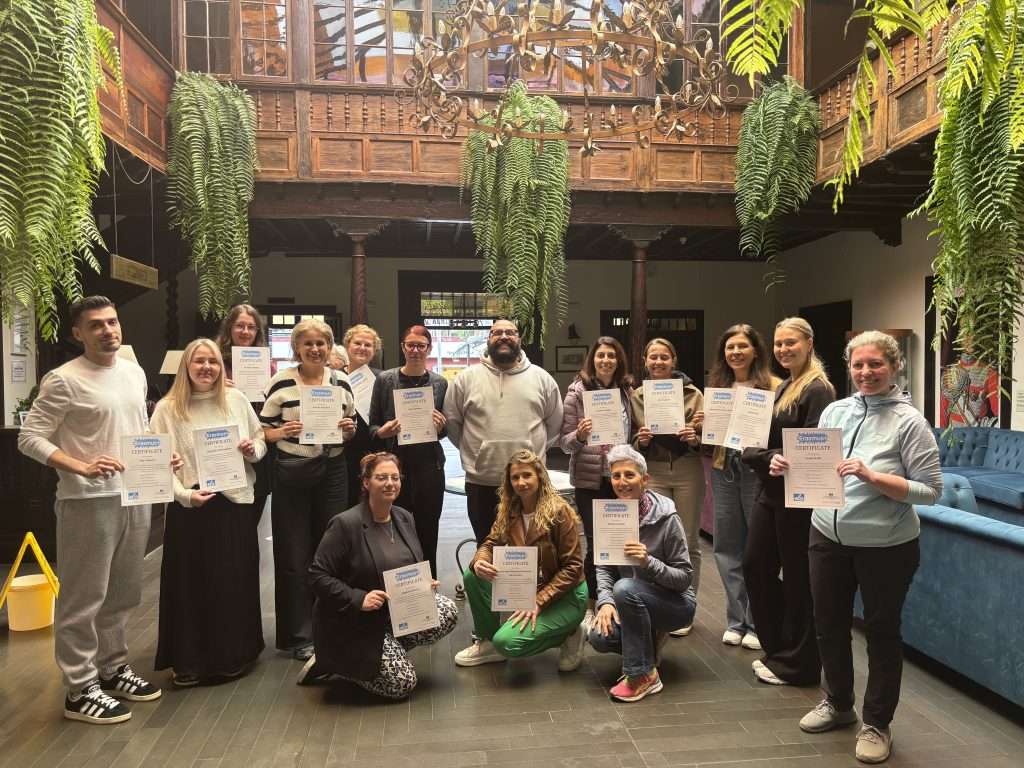
At the end of the course, everyone created a personalized reflection of their learning and cultural journey in Tenerife. From exploring historic sites in the city to solving team challenges where each member faced a handicap, we said goodbye to a week full of laughter, creativity, and new experiences.
Discover more about this course here.
Where this course took place: Erasmus courses for teachers in Tenerife
Planning your own Erasmus+ course? Download the 2026-2027 course catalogue
 English (UK)
 Español
 Italiano
 Deutsch
 Română
 Български
 Čeština
 Ελληνικά
 Polski
 Português
 Français