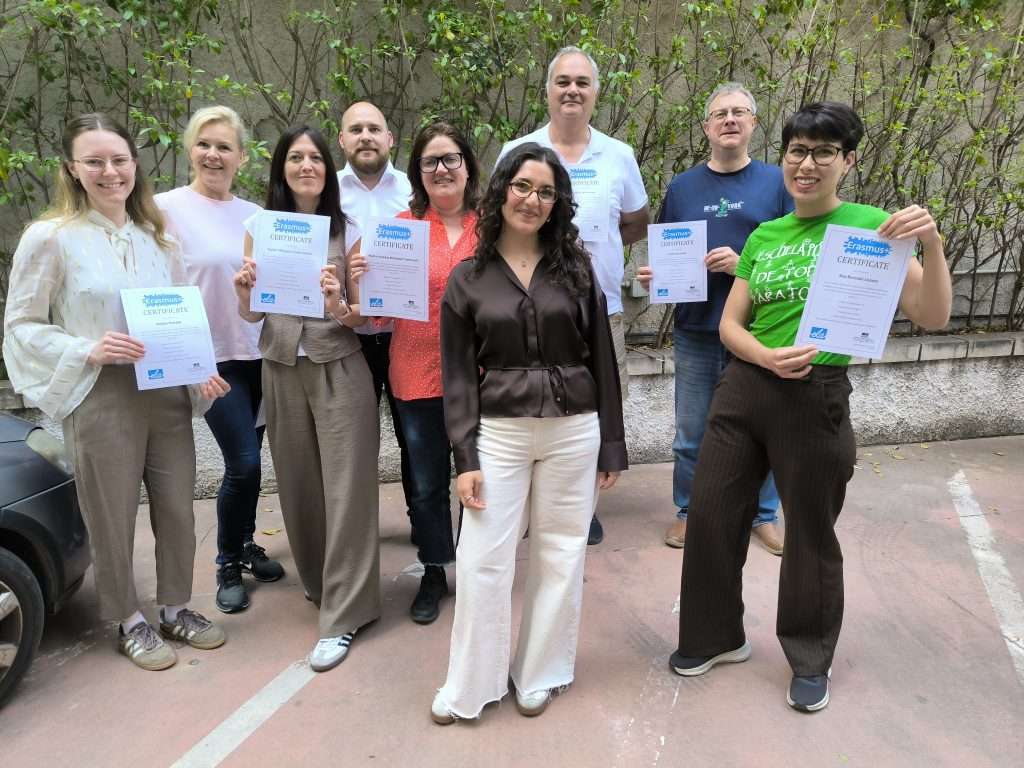
The new edition of the combined courses “Soft Skills and Emotional Intelligence for teachers and education staff” and “Effective Communication and Public Speaking for teachers and education staff”took place in Palermo from 10/05/2026 to 16/05/2025. The participants came from all across Europe, with Linda, Matīss and Uldis from Paul Stradins Clinical University in Latvia, Vilma and Daiva from Vytautas Magnus University in Lithuania, Sophie from Dublin and Dún Laoghaire Education and Training Board in Ireland and participants coming from three different Spanish schools: Isabel and Antonio from IES Martín Aldehuela, Maria from IES Mossèn Alcover and Noa Bernabé from CIPFP Canastell.
The first topic discussed in the course was Emotional Intelligence. This term indicates the ability to recognise not only our own feelings but also other people’s emotions, in order to be aware of ourselves and our surroundings. Another skill that was tackled during this session was empathy. Through a series of exercises the participants were able to learn more about practising empathy, self-control, self-motivation and building a connection.
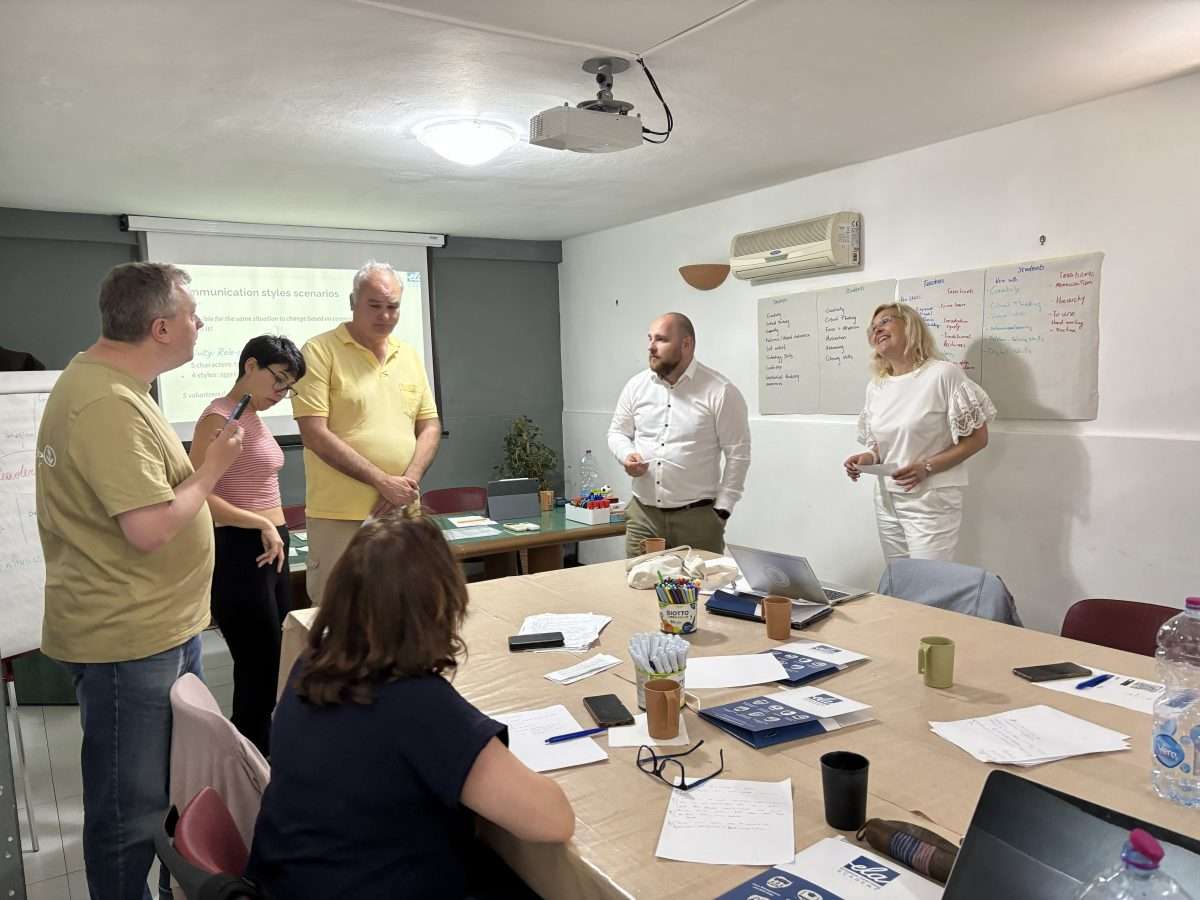
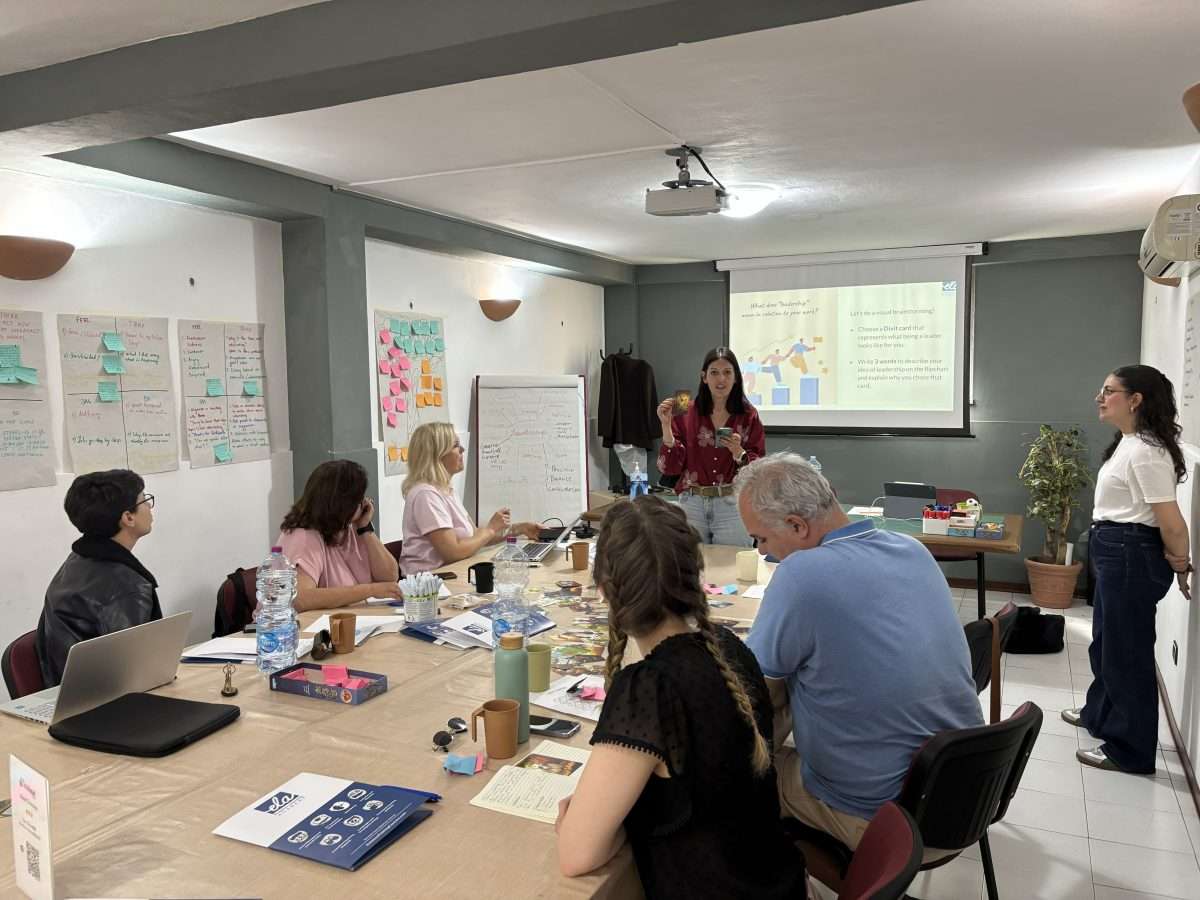
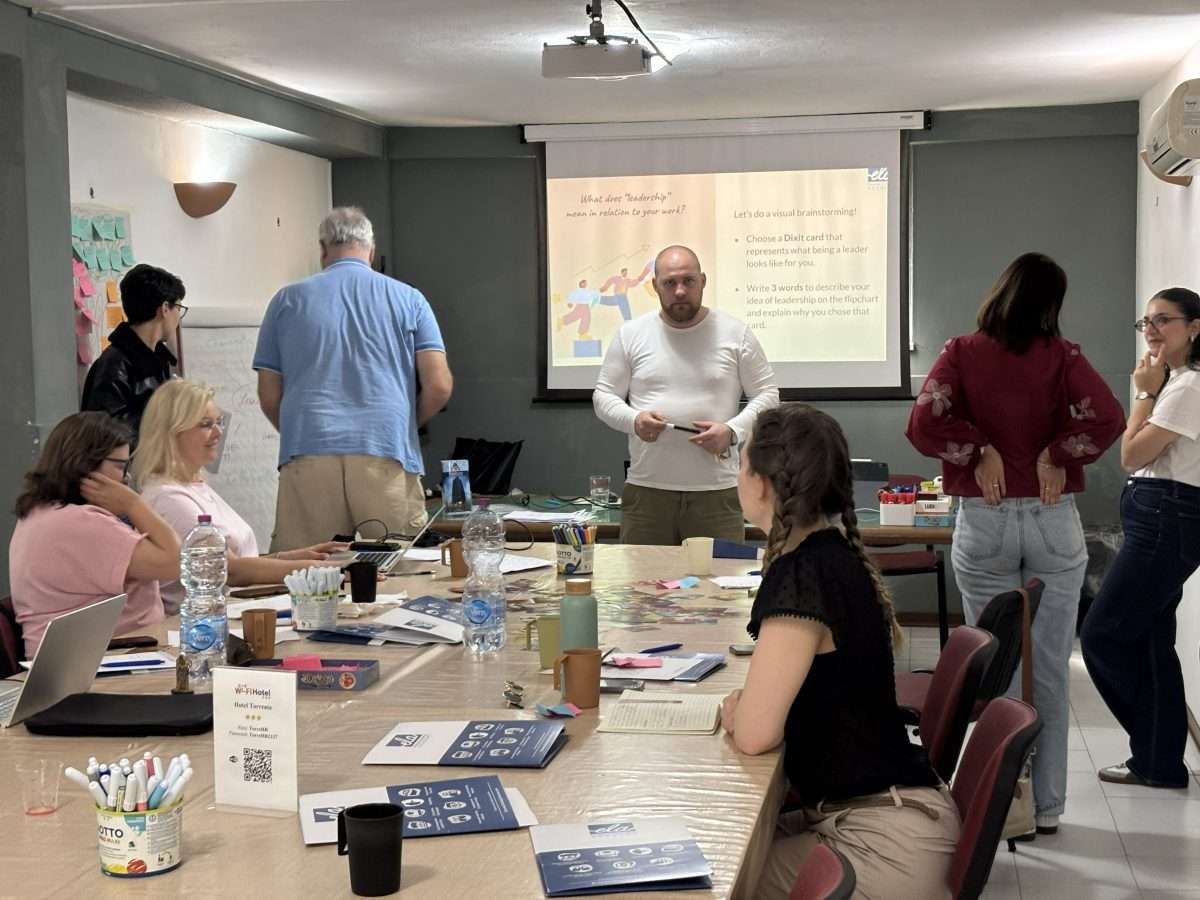
A good teacher is also a good leader of the classroom because they have to give motivation and guide their students to reach a specific goal. Leadership comes in different forms, but not all of them are effective in every situation. For this reason, participants were asked to think about the main characteristics of the leaders they admire and reflected on the different leadership styles.
One of the most important skills for working in a team is effective communication. The participants focused their attention on the different communication styles: aggressive, passive, passive-aggressive and assertive. Communication is essential when it comes to teamwork. Being able to show assertiveness can be tricky, however, by discussing this topic they saw that being assertive does not mean to be impolite, but it means to communicate what you want effectively. Through this , the participants could debate upon different behaviors that they have witnessed, in order to better handle real-life situations at schools with their students, for example.
In order to improve their communication skills they also had to prepare an exercise on public speaking. They learnt tips and tricks on how to present yourself, how to control your body language and your nonverbal communication. In order to gain confidence the participants were asked to prepare a short one-minute speech to perform in front of the class and to put at use the skills they had learned.
The last topic of this course was Conflict and stress management. Working with people can be difficult sometimes and we do not always know how to deal with conflicts. By sharing their own experiences they realised how these are common situations and that conflict doesn’t necessarily have to bring a negative outcome, but it is also a possibility for growth and development. One of the participants also took this opportunity to implement an exercise about stress management and leadership which allowed the whole group to feel more comfortable with each-other.
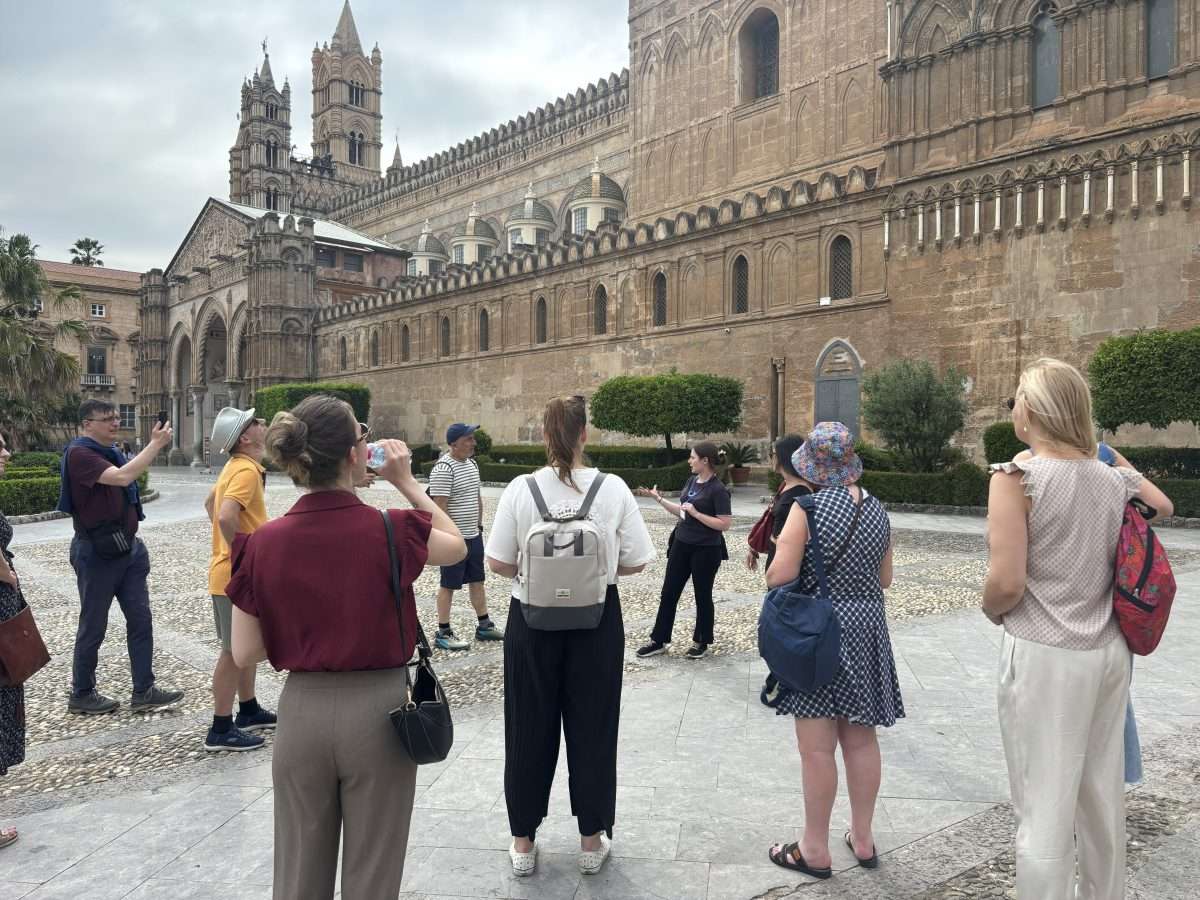
This course allowed participants to confront themselves with each other and learn from their shared experiences. Each participant had a different background that certainly contributed to the growth of the group as a whole. In addition, networking was also possible because of the planned cultural activities, showing that learning does not happen only inside a classroom!
Discover more about this course here.
Where this course took place: Erasmus courses for teachers in Palermo
Planning your own Erasmus+ course? Download the 2026-2027 course catalogue
 English (UK)
 Español
 Italiano
 Deutsch
 Română
 Български
 Čeština
 Ελληνικά
 Polski
 Português
 Français