Keeping pace with the digital competences needed to maintain a motivated, engaged, and enthusiastic classroom can be challenging for language teachers. Integrating technology into language instruction enables students to take an active role in their learning while encouraging communication and collaboration with their peers.
The latest edition of the course “Teaching languages in the digital era: the best apps, AI tools and ICT solutions for learning languages” was held in Tenerife from 22/03/2026 to 28/03/2026. Participants came from across Europe, including Sybille and Claudia from Hermann-Greimner-Realschule, Birgit from Elisabeth-Langgässer-Gymnasium Alzey, Wanda from Freie Werkschule Meißen in Germany; Manuela and Vladka from Primary school Tišina in Slovenia; Peggy from COLLEGE FRANCOIS TRUFFAUT in France; Francesca, Anna e Alessia from IC Malipiero Marcon in Italy.
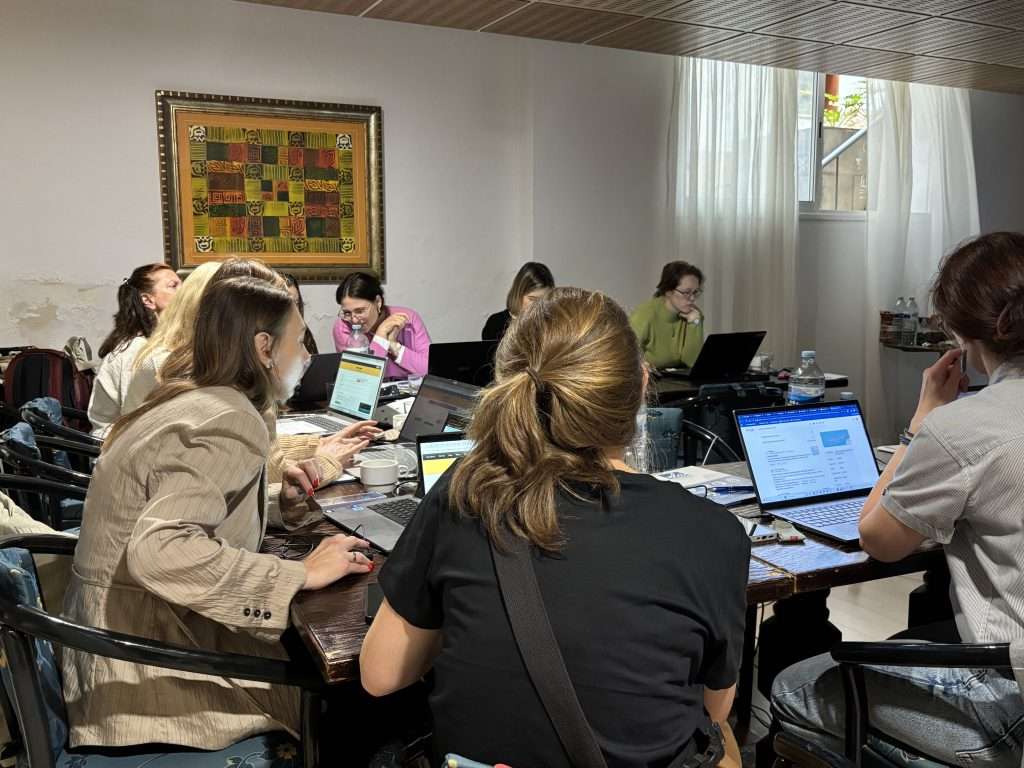
The week began on Monday with introductory activities designed to help participants get to know one another while sharing their professional experiences and perspectives. They explored digital tools for building collaborative boards and learned how to integrate multimedia elements such as videos, images, and audio into their lessons to strengthen language acquisition and teamwork. These activities laid a solid groundwork for understanding how technology can enhance interaction and cooperation in the classroom.
On Tuesday, attention turned to the main features and applications of IT and AI-based tools for creating interactive presentations, digital content, and escape room activities. Participants practiced developing lessons that are both engaging and adaptable to individual learners. They explored how technology can be used to personalize instruction, track student progress, and increase motivation through creative and interactive methods.
Wednesday focused on game-based learning, including quizzes and interactive video lessons. Educators learned how to design assessment tools and introduce new topics in a way that combines enjoyment with educational effectiveness. Through hands-on practice, they discovered how interactive content can improve vocabulary, grammar, and communication skills, while also providing instant feedback and maintaining high levels of student engagement.
On Thursday, participants explored the seven essential components of an effective prompt and the use of generative AI tools to support both teaching and learning. They developed strategies for crafting clear and purposeful prompts that encourage critical thinking, creativity, and active participation. Practical activities demonstrated how AI tools can assist with lesson planning, content creation, and delivering personalized feedback, expanding teachers’ instructional possibilities.
The final day, Friday, was dedicated to applying and testing newly acquired skills. Participants created a variety of activities using AI-powered platforms and digital tools, designing complete lessons that incorporated multimedia resources, interactive elements, and AI-generated materials. This session highlighted collaboration, experimentation, and reflection, ensuring that teachers could confidently transfer these methods to their own classrooms.

Throughout the course, participants also explored platforms for designing interactive presentations, worksheets, explainer videos, and educational materials with voice narration and embedded questions, turning traditional lessons into engaging learning experiences. Tools for editing images and videos were also introduced, giving students more opportunities to express creativity and actively engage in their learning journey. By the end of the week, participants left with practical knowledge, innovative strategies, and a deeper appreciation of how digital tools can transform language education, emphasizing the value of collaboration, experiential learning, and professional exchange.
Discover more about this course here.
Where this course took place: Erasmus courses for teachers in Tenerife
Planning your own Erasmus+ course? Download the 2026-2027 course catalogue
 English (UK)
 Español
 Italiano
 Deutsch
 Română
 Български
 Čeština
 Ελληνικά
 Polski
 Português
 Français