Classrooms today look very different from those of even a decade ago. Interactive whiteboards, tablets, learning platforms, podcasts, and short-form videos have entered the daily life of students and teachers alike. In this context, digital media education has become a central pillar of modern schooling: it is no longer about whether to integrate technology, but how to do it meaningfully, ethically, and pedagogically.
For teachers, this shift represents both an opportunity and a challenge. Digital tools can boost engagement, personalize learning, and prepare students for a connected world, but they also require new competences, careful planning, and critical awareness. This article explores effective strategies for teaching with digital media in schools, clarifies the role of digital media in education, and provides practical examples that educators can adapt to their own classrooms.
What is digital media learning?
Digital media learning refers to the use of digital tools, content, and platforms to support teaching, learning, and student expression. It combines media literacy (understanding and critically analyzing media messages) with digital literacy (using technology effectively and responsibly). In practice, it includes activities such as creating videos, designing infographics, producing podcasts, collaborating on online documents, coding, or analyzing social media content.
Unlike traditional e-learning, which often focuses on delivering content through a screen, digital media learning is interactive and participatory. Students are not just consumers of information: they become creators, communicators, and critical thinkers.
This active dimension is what makes digital media education particularly powerful for developing 21st-century skills such as creativity, communication, collaboration, and critical thinking.
The role of digital media in education
The role of digital media in education goes well beyond replacing textbooks with screens. When integrated thoughtfully, digital media transforms the teaching and learning experience in several key ways.
- Personalization of learning: adaptive platforms and digital resources allow teachers to tailor activities to different levels, learning styles, and paces.
- Engagement and motivation: multimedia content—videos, simulations, gamified exercises—can make abstract concepts more concrete and appealing.
- Access to information: students gain access to global resources, expert voices, and authentic materials that were previously out of reach.
- Collaboration: cloud-based tools enable group work that crosses classroom walls, even connecting students with peers in other countries through approaches such as creating a virtual classroom.
- Inclusion: assistive technologies, captions, text-to-speech, and translation tools support learners with special educational needs or different linguistic backgrounds — see examples from inclusive education and special needs.
- Preparation for the future: digital media use in school equips students with the literacies they will need for higher education and the workplace.
At the same time, the role of digital media in education includes helping students navigate misinformation, online safety, and digital well-being — topics that require explicit teaching, not just incidental exposure.
Practical school-level guidance on online risks and protection can be found in resources on preventing bullying and cyberbullying in schools.
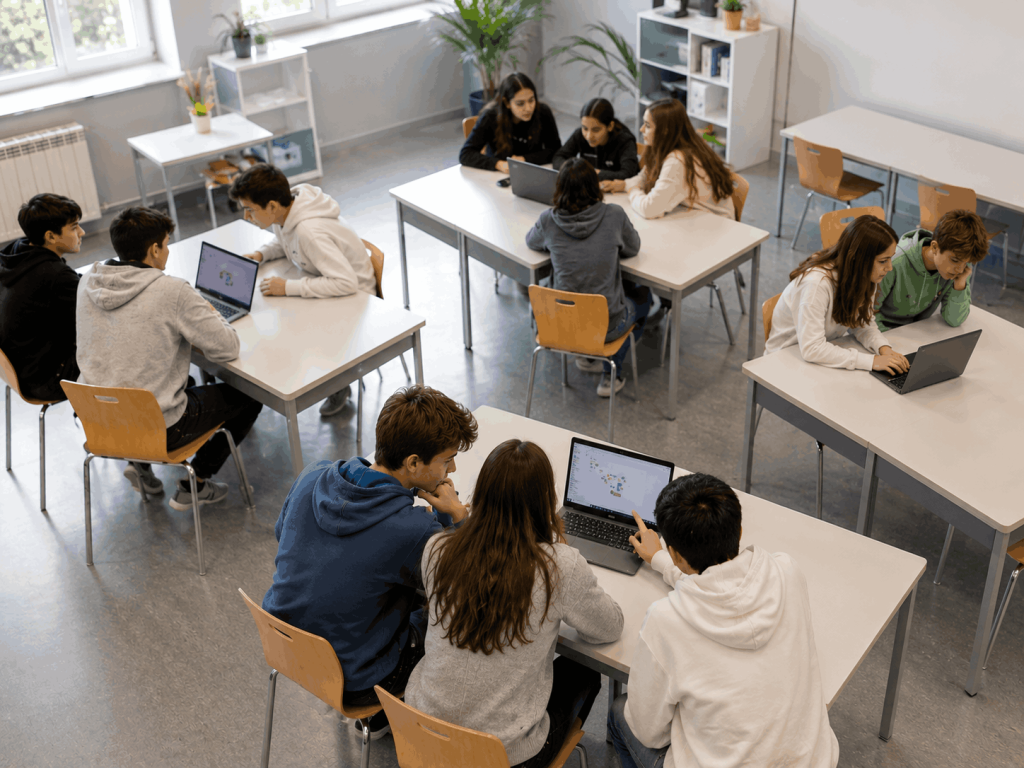
What are the 4 types of digital media?
Digital media can be grouped into four broad categories, each with distinct educational uses.
- Text-based media
This includes e-books, articles, blogs, wikis, and online news. In the classroom, text-based digital media supports reading comprehension, research skills, and collaborative writing through tools like shared documents. - Audio media
Podcasts, audiobooks, recorded interviews, and music streaming fall into this category. Teachers can use audio for language learning, storytelling, oral history projects, or to make content accessible to students who learn better by listening. - Visual media
Images, infographics, photographs, digital illustrations, and slide presentations help students visualize information. Creating visual content also strengthens summarization and synthesis skills. - Audiovisual and interactive media
This includes videos, animations, virtual reality experiences, simulations, educational games, and interactive apps. These formats are particularly effective for demonstrating processes, exploring complex systems, and engaging different senses simultaneously. For example, game-based learning and gamification are powerful strategies within audiovisual and interactive media.
A well-designed lesson often combines several of these types, creating a multimodal experience that reaches a wider range of learners.
What is an example of digital media education?
A concrete example of digital education is a flipped classroom project on climate change.
- Before class, students watch a short documentary and read selected online articles.
- In class, they work in small groups using a shared online whiteboard to map causes and consequences, then create a podcast episode interviewing a “virtual expert” using AI-assisted research (for instance guided by resources like ChatGPT for teachers).
- Finally, they publish their findings on a class blog and discuss them with a partner school abroad through a video call.
This single project integrates text, audio, video, and collaboration tools, develops research and communication skills, and connects learning to real-world issues.
Other examples of education digital media in action include flipped classroom approaches, gamified math platforms, virtual science labs, digital storytelling in language arts, or coding projects in primary school.
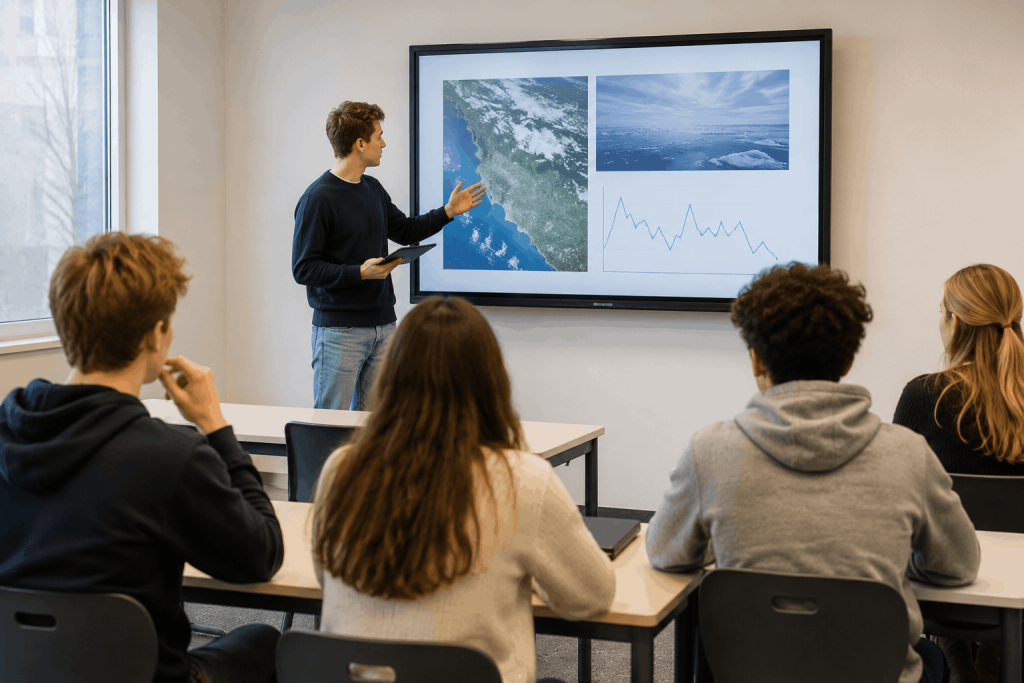
Strategies for integrating digital media in schools
To make digital media in education truly effective, schools and teachers can follow several practical strategies.
- Start from pedagogy, not technology: choose digital tools only after defining clear learning objectives. The tool should serve the goal, not the other way around — see practical approaches to applying new technologies to traditional and online teaching.
- Adopt the SAMR or TPACK frameworks: these models help teachers move from simple substitution of analog tools to deeper transformation of learning experiences.
- Promote student creation, not just consumption: assignments that require students to produce digital artifacts foster deeper learning than passive viewing. Explore the best tools for this in exploring the best tools to boost creativity and critical thinking.
- Teach critical media literacy explicitly: dedicate lessons to evaluating sources, recognizing bias, understanding algorithms, and identifying misinformation. See projects focused on promoting media literacy and critical thinking.
- Blend digital and analog: the most effective classrooms combine screen-based activities with hands-on, face-to-face, and outdoor experiences — for ideas, read about integrating outdoor learning into formal education.
- Address digital citizenship: include online safety, privacy, ethical behavior, and digital well-being as ongoing themes.
- Invest in teacher training: continuous professional development is essential for educators to feel confident and competent with new tools and methodologies — for example, training weeks such as teaching with technology.
Overcoming common challenges
Integrating digital media also brings challenges: unequal access to devices, screen fatigue, distraction, data protection concerns, and the risk of widening the digital divide.
Schools can address these by ensuring equitable access, setting clear classroom routines, involving families, and collaborating with colleagues to share resources and good practices. To reduce screen fatigue and support wellbeing, consider whole-school approaches such as well-being in schools: a mindfulness approach for teachers and staff.
Building teacher confidence through professional development
Ultimately, the success of digital media education depends on the people who use it. Teachers need time, training, and a supportive community to experiment, reflect, and improve. International professional development programs, such as Erasmus+ courses, allow educators to discover new approaches, exchange ideas with peers from across Europe, and bring innovative practices back to their schools — for example, exploring AI in education: a week of practical learning in Athens.
By investing in their own digital and pedagogical growth, teachers become the true drivers of meaningful change—turning digital media from a simple add-on into a powerful catalyst for better learning.
 English (UK)
 Español
 Italiano
 Deutsch
 Română
 Български
 Čeština
 Ελληνικά
 Polski
 Português
 Français