Artificial intelligence has already walked into our classrooms. The real question is no longer whether teachers should use it, but how to use it well. Educators today are expected to share knowledge, nurture skills and, at the same time, keep pace with tools that evolve month after month. When AI is understood rather than feared, it stops being a threat to teaching and becomes an ally: a way to save time on repetitive tasks and to give students more of what only a teacher can offer.
This idea was at the heart of the new edition of the course “Artificial Intelligence Course for Teachers: Advanced Tools and Apps”, which took place in Tenerife from 5 to 11 July 2026. The participants came from all across Europe and beyond, including Rui from Agrupamento de Escolas de Vilela in Portugal; Ricardo from Colégio Diocesano de Nossa Senhora da Apresentação in Portugal; Jana from ZŠ Kamenice in the Czech Republic; Monika from Střední průmyslová škola polytechnická Centrum odborné přípravy Zlín in the Czech Republic; Sintija from Tukuma novada pamatskola “Spārni” in Latvia; Federica and Valentina from L.A. Muratori in Italy; Eliza, Ewelina and Tatiana from AES in Italy; Tiziana from IIS S. Pertini in Italy; and İlayda from Istanbul Okan University in Turkey.
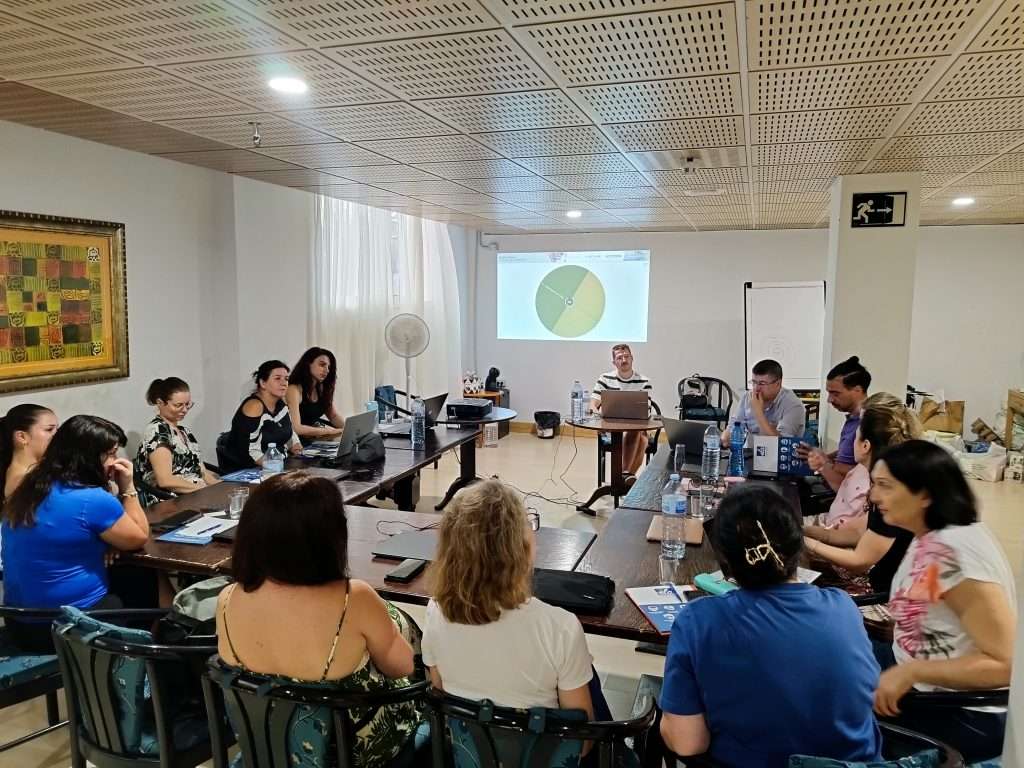
The week began by mapping out what AI can realistically do for education. Participants looked at how these systems can personalise content to individual learning paths, take over time-consuming administrative work and turn classroom data into insights a teacher can actually act on. Intelligent tutoring systems, automated grading tools and adaptive learning platforms were explored not as futuristic promises but as resources that are available today. A large part of the training was devoted to prompting. The quality of what an AI gives back depends almost entirely on the quality of what we ask it, and this turned out to be the single most transferable skill of the week. Teachers practised writing precise, context-rich prompts for ChatGPT, refining them through trial and error, and adapting them to real tasks.
The group discussed algorithmic bias, data privacy and the need for clear school policies on how AI may and may not be used. Understanding these dimensions is what separates responsible adoption from blind adoption, and it is what allows teachers to model good digital judgement for their students instead of simply banning the technology.
Participants also worked with ICT tools that now integrate AI features, focusing on those that strengthen collaboration, creativity and critical thinking. The approach was consistently hands-on: try the tool, break it, discuss where it fits in a real lesson, and decide honestly whether it adds value or just adds noise. Assessment in the age of AI was another key topic. If a chatbot can produce an essay in seconds, what exactly are we assessing? The group explored formative assessment strategies supported by AI, real-time feedback, and differentiated instruction, and reflected on how to design tasks that measure thinking rather than output.
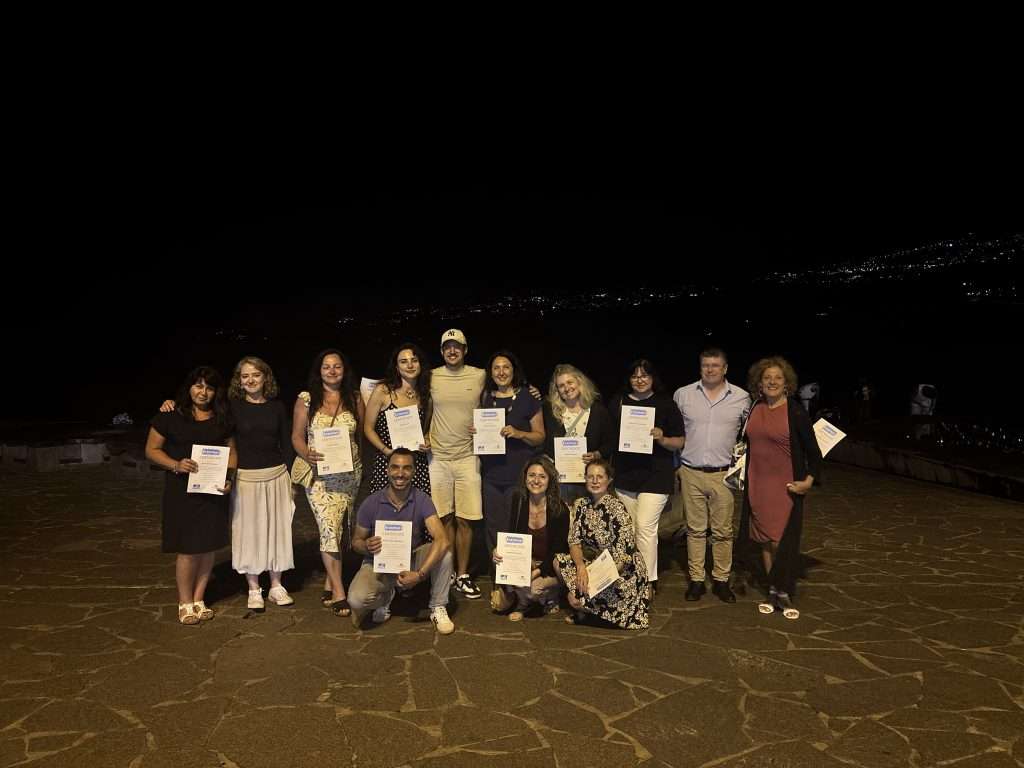
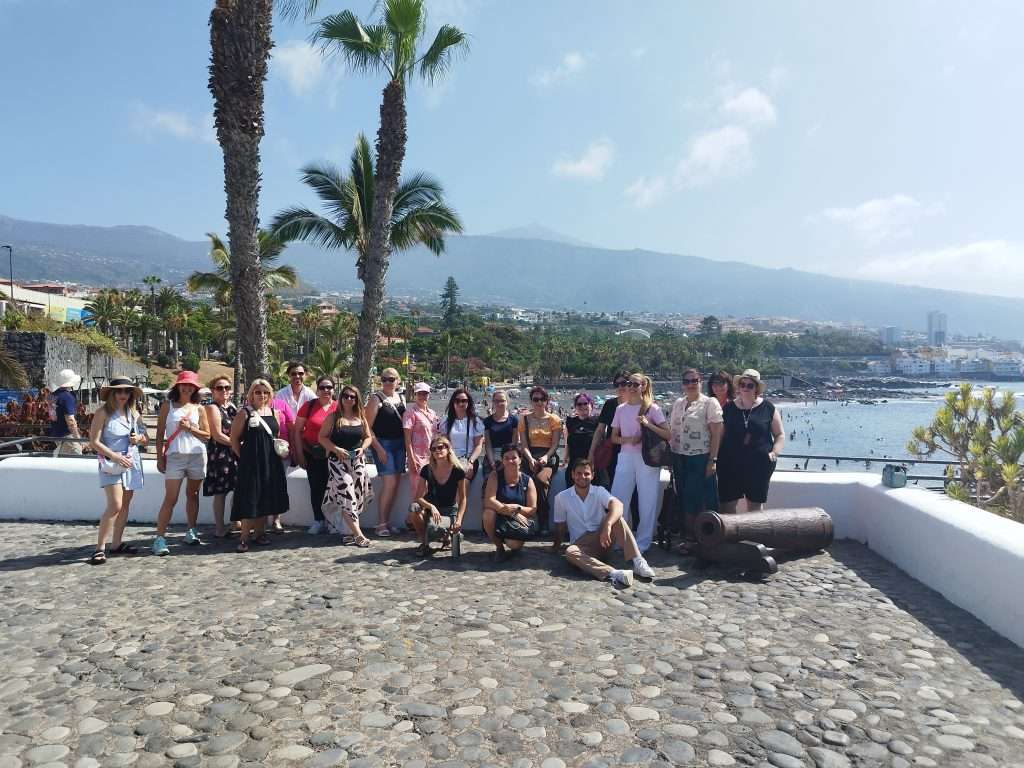
The cultural activities in Tenerife added a further layer to that exchange, giving everyone the space to connect beyond the classroom. Everyone left with a set of practical tools, a clearer ethical compass and concrete ideas for bringing artificial intelligence into their own schools.
Discover more about this course here.
Where this course took place: Erasmus courses for teachers in Tenerife
Planning your own Erasmus+ course? Download the 2026-2027 course catalogue
 English (UK)
 Español
 Italiano
 Deutsch
 Română
 Български
 Čeština
 Ελληνικά
 Polski
 Português
 Français