Nowadays we are living in a critical time in history where we cannot ignore the topics of climate change and environmental sustainability. Because the consequences of the state of the environment will be mainly faced by the future generations, it is essential that teachers learn how to bring out these matters inside the classroom. Moreover, it is even more important to learn how to address these topics, encouraging a sense of possibility of change rather than despair.
This new course “Green skills for education: promoting environmental awareness and sustainable actions in the classroom”, took place in Bologna from 16/08/2026 to 22/08/2026, with 11 participants from 4 different countries: Deyana, Milena, Ventsislava from SU “Dimcho Develyanov”, Varna in Bulgaria, Corinna Lowin from Städt. Max-Planck-Gymnasium in Germany, Nicoleta, Nita and Iuliana from Școala Gimnazială Bogdan Vodă and Lioara from Colegiul National Iosif Vulcan, in Romania together with Janez from Gimnazija Škofja Loka, Slovenia, Bára from Základní škola a Mateřská škola Dr. Edvarda Beneše, Praha-Čakovice, Czech Republic and Peter from Petersburg Outdoor Education and Training Centre, Ireland.


At the beginning of the week, we delved into the concept of Green Skills, reflecting on their growing importance in today’s society. The first day was devoted to exploring the vocabulary surrounding environmental issues, providing an opportunity to clarify and examine key concepts such as sustainability and sustainable development. The following day, the focus shifted to greenwashing. Participants investigated brands from their own countries, learning to distinguish genuinely sustainable products from those promoted as “green” despite being associated with questionable or unethical practices. Recognising the warning signs of greenwashing represented a valuable exercise in critical thinking, helping participants develop the ability to navigate the increasingly complex debates surrounding climate change and sustainability.
The Agenda 2030 and the Sustainable Development Goals (SDGs) were another central theme of the course. Working collaboratively, participants examined the seven goals most closely connected to environmental sustainability and discovered how the different elements of the training were linked to specific SDGs. Through games, practical tasks and theoretical input, they were encouraged to understand how global challenges can be addressed through concrete actions at both individual and educational levels.
The training also encouraged participants to reflect on how small everyday choices can contribute to meaningful change and on how educators can inspire both young people and adults to become more actively involved in sustainable development. A range of experiences provided the opportunity to investigate topics such as global warming, carbon footprints, tipping points, consumerism and other key dimensions of the climate crisis. Particular attention was given to the development of critical thinking and communication skills: participants practiced debating controversial and divisive issues in an immersive and engaging environment, learning how to construct arguments, consider contrasting viewpoints and approach sensitive climate-related topics in a thoughtful and informed way.
Two days were devoted to non-formal approaches to climate change education. Participants took part in outdoor experiences aimed at fostering a stronger connection with nature, while also discovering strategies to stimulate creativity, participation and curiosity among learners. Special attention was dedicated to Project Based Learning (PBL), examining how this methodology can support teachers in fostering a greener and more active mindset. Participants gained a better understanding of the PBL approach, beginning with the design of a strong driving question and moving on to the creation of an effective lesson plan capable of providing structure, purpose and coherence to a project-based learning experience.
To further consolidate their understanding of PBL, participants explored the Erasmus+ Key Action 2 project Young Smart Cities (YSC), with a particular focus on its teachers’ materials and serious game. The project offered a practical example of how project-based approaches can be used to address real-world challenges and engage learners in meaningful educational experiences connected to sustainability, citizenship and future-oriented skills.
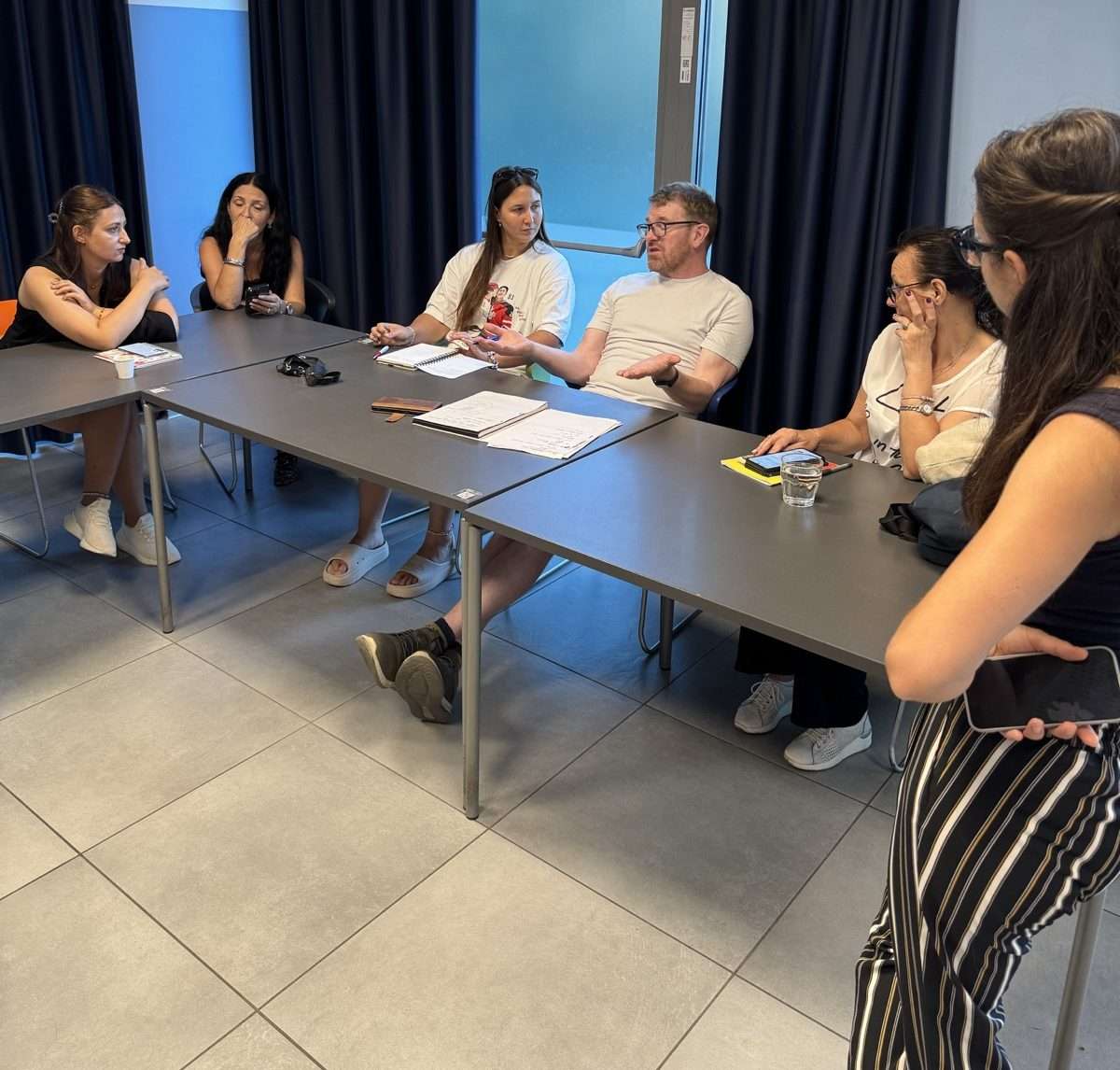
One of the most valuable elements of the training was also the exchange of good practices. Sharing personal experiences, educational projects and approaches to sustainability enabled participants to learn from one another, discover new ideas and take inspiration from practices already implemented by colleagues in different contexts.
We are delighted that our participants left Bologna with a big smile on their faces, a wealth of new knowledge and skills, and, above all, a heart full of inspiring experiences and memories!
Discover more about this course in: https://erasmustrainingcourses.com/green-skills
Where this course took place: Erasmus courses for teachers in Bologna
Planning your own Erasmus+ course? Téléchargez le catalogue des formations 2026-2027
 English (UK)
 Español
 Italiano
 Deutsch
 Română
 Български
 Čeština
 Ελληνικά
 Polski
 Português
 Français