În zilele noastre este ușor să ne simțim copleșiți și să credem că nu putem face față sarcinilor zilnice. Situațiile stresante pot apărea atât în viața profesională, cât și în cea personală, iar evitarea conflictelor poate fi dificilă atunci când ne aflăm într-un mediu stresant. În cadrul acestui curs, participanții au avut ocazia, prin activități teoretice și practice, să învețe despre instrumentele necesare pentru a gestiona și a depăși conflictele și situațiile stresante.
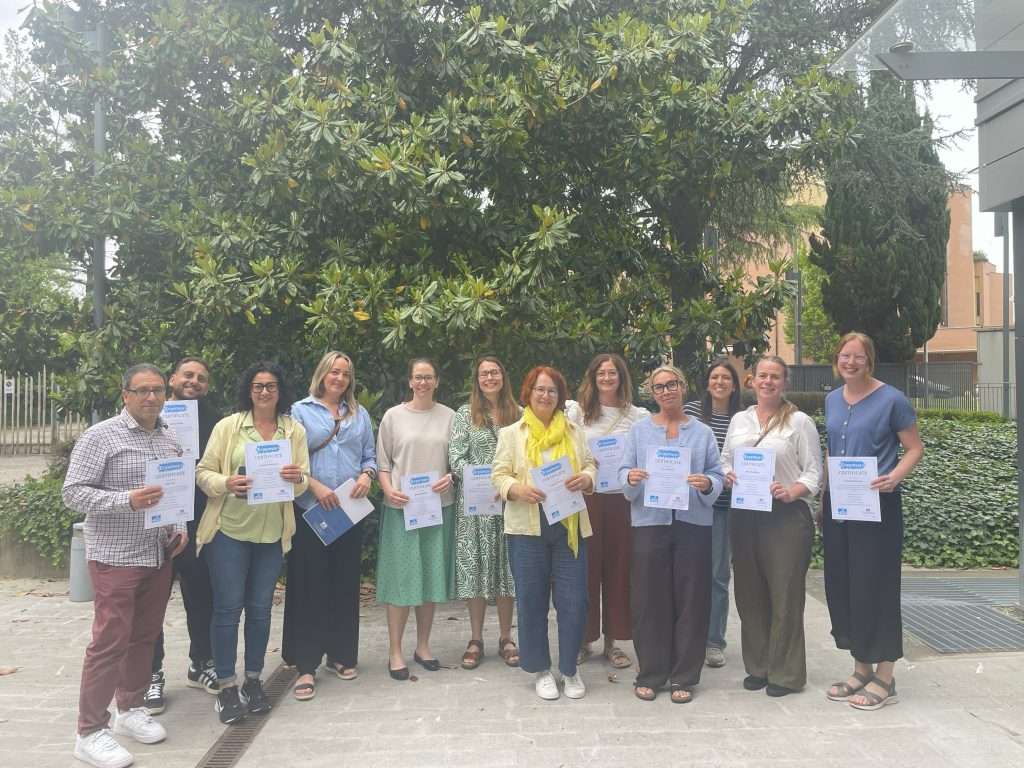
The new edition of the course “Stress and Conflict Management: the way to resilience and satisfaction” took place in Bologna de la 03/05/2026 to 09/05/2026. The participants came from all across Europe, with Maria Sundberg, Theresé Karlsson and Ulrika Lysén from Vasaskolan in Sverige, Sara Wernersson and Sara Merbom Adolfsson from Teknikum Växjö in Sverige, Lorraine Debrincat, Josmar Refalo and Alan Cini from Sir M A Refalo Sixth Form in Malta, Sofia Winberg and Jessica Enander from Uddevalla vuxenutbildning in Sverige, and Irmgard Forkert from MS VBS In der Krim in Austria.

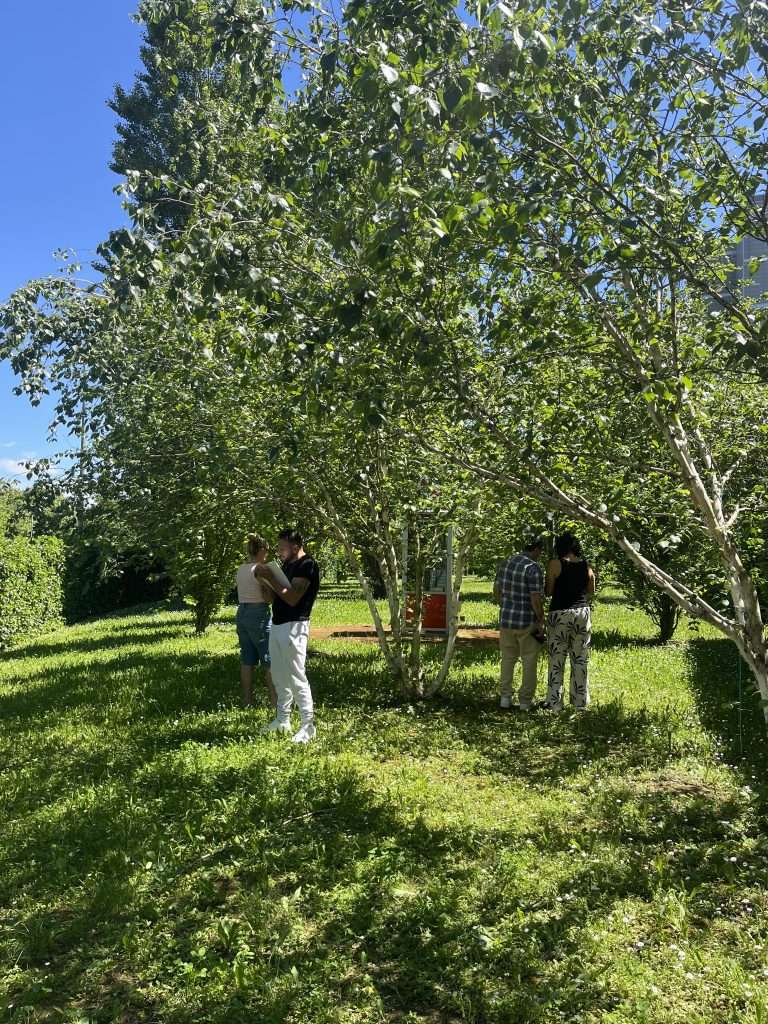
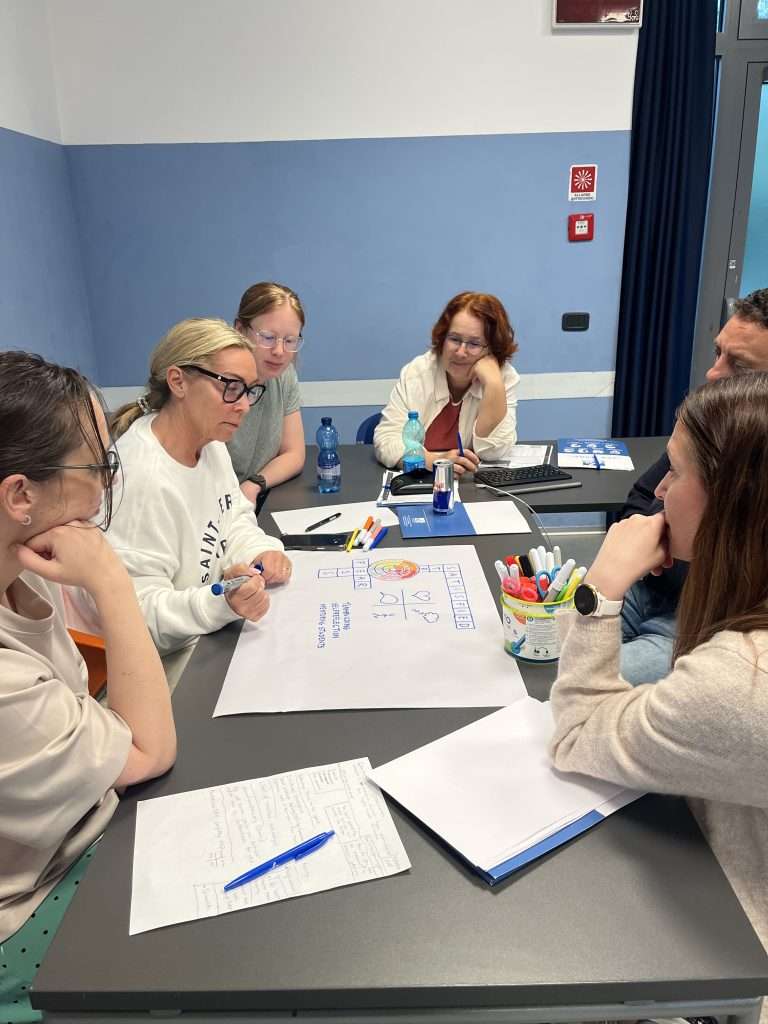
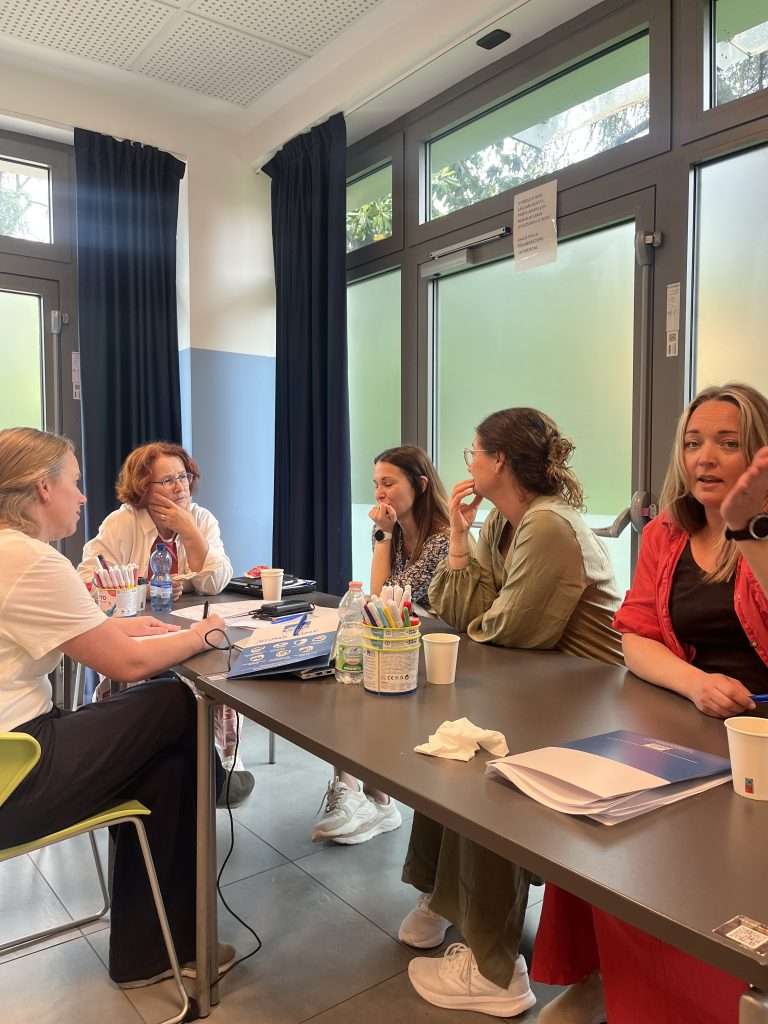
În prima zi, participanții au reflectat asupra semnificației cuvântului stres by brainstorming in groups. Stress is caused by a series of factori de stres that can be related to many factors: physical, environmental, family-related or work-related. However, small amounts of stress can also have positive outcomes and push us to achieve our goals or to respect a deadline for example. For this reason the participants learnt to distinguish between Situație de urgență (negative) and Eustres (positive).
During this course the participants learnt about a series of strategies, both cognitive and behavioural, designed to overcome stressful situations in the workplace.
Another topic that was discussed during the course was empatie, which is a fundamental skill when it comes to dealing with conflicts. It can be tricky sometimes to show an empathic response, especially when we haven’t experienced the same feeling as the person in front of us. However, it is possible to practice it and the participants learnt how to distinguish it from other types of responses.
In order to solve conflicts it is necessary to know how to communicate effectively. The participants discovered the different communication styles and were asked to do a group activity in which each member had to contribute in resolving a conflict. Although it can be difficult to solve a conflict, as this activity demonstrated, the team members saw how this situation could also be an opportunity to grow and learn. This method can also be applied to a workplace and a classroom.
Ultimul subiect care a fost abordat a fost atenție conștientă, adică practica de a fi pe deplin prezent și de a observa gândurile și experiențele fără a le judeca. Aceasta îmbunătățește atenția, conștiința de sine și controlul emoțional. Reducerea stresului bazată pe mindfulness este utilizată pe scară largă pentru gestionarea stresului și a sănătății mintale. Participanții au practicat, de asemenea, exerciții de mindfulness și meditații. Acest tip de exercițiu îi ajută pe indivizi să devină mai conștienți de simțurile, gândurile și emoțiile lor, favorizând un sentiment mai puternic de prezență și de mindfulness.
Since participants came from different cultural backgrounds, it was an opportunity for them to confront themselves with each other and learn from their shared experiences. More importantly, this course showed them that not only they have the tools with dealing with stressful situation, but that sometimes there can also be a positive out come from an existing conflict.
Descoperiți mai multe despre acest curs aici.
Where this course took place: Erasmus courses for teachers in Bologna
Planning your own Erasmus+ course? Descarcă catalogul de cursuri 2026-2027
 English (UK)
 Español
 Italiano
 Deutsch
 Română
 Български
 Čeština
 Ελληνικά
 Polski
 Português
 Français