Nowadays, schools and educational programs are welcoming a wide variety of people whose socio-cultural backgrounds are very diverse. To help students adjust to a new cultural environment, on the one hand, and to model critical and open minds valuing and celebrating diversity rather than rejecting it, on the other, is one of the biggest challenges for teachers.
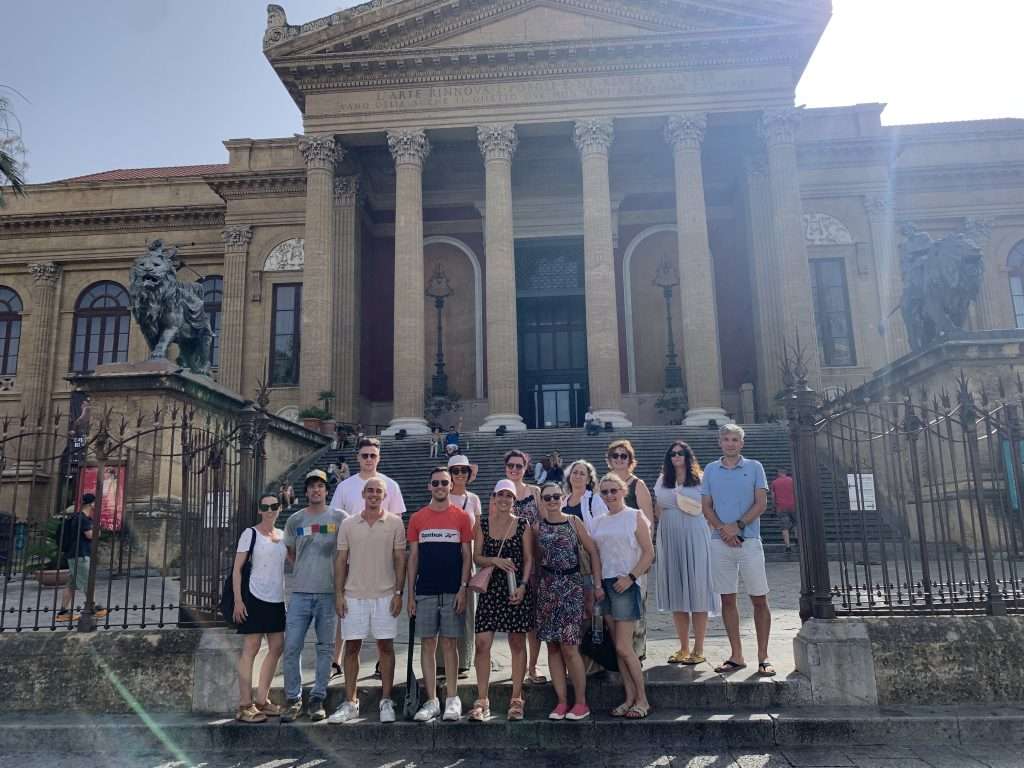
The new edition of the course “Intercultural learning and cultural diversity in the classroom” took place in Palermo from 19/07/2026 to 25/07/2026. The participants came from all across Europe, with Hanna and Dorota from Szkoła Podstawowa im. Królowej Jadwigi w Jerzykowie, Poland ; Laura from Ammattiopisto Spesia, Finland ; Sanita from Rīga Stradiņš University, Latvia ; Marisa and Luis from Centro Concertado Fundación Flors, Spain ; Christina from Gymnasieskolan Vipan, Sweden ; Sanna from Hyrylän yläaste, Finland ; Emese from Budapest University of Technology and Economics, Hungary ; Soledad from Escola Oficial d’idiomes de Palma de Mallorca, Spain ; and finally, Cristina from Institut Bellvitge, Spain.
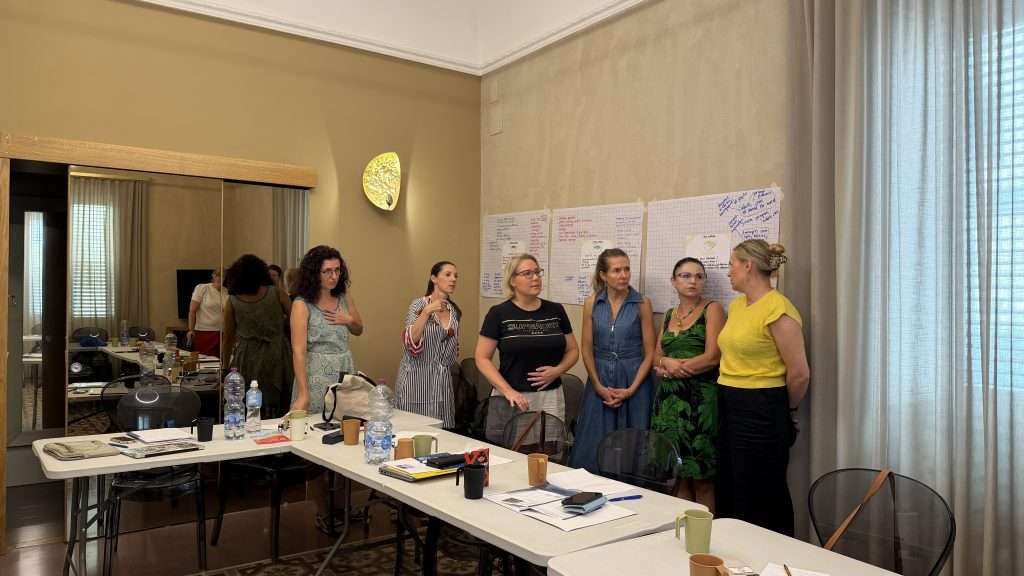
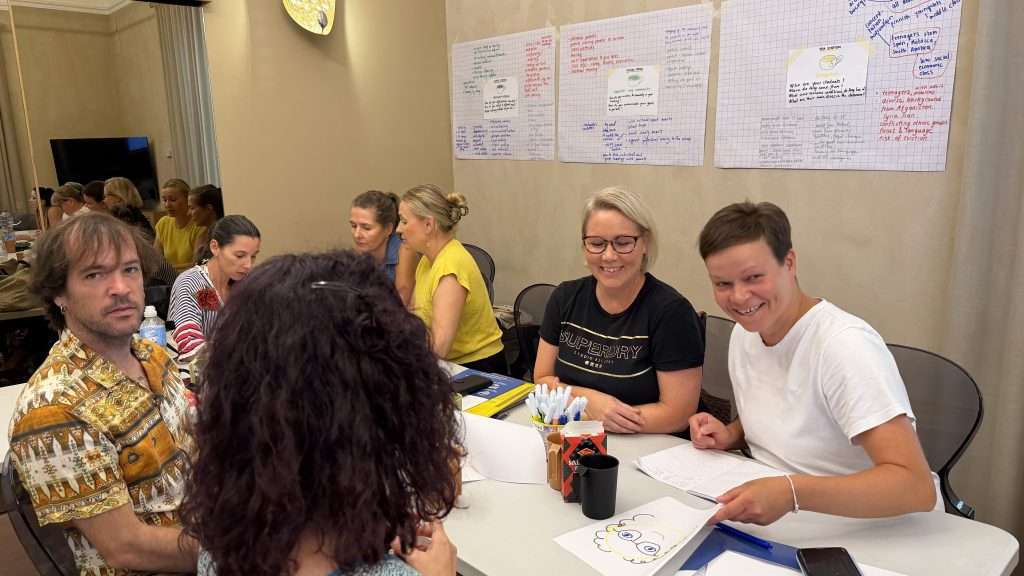
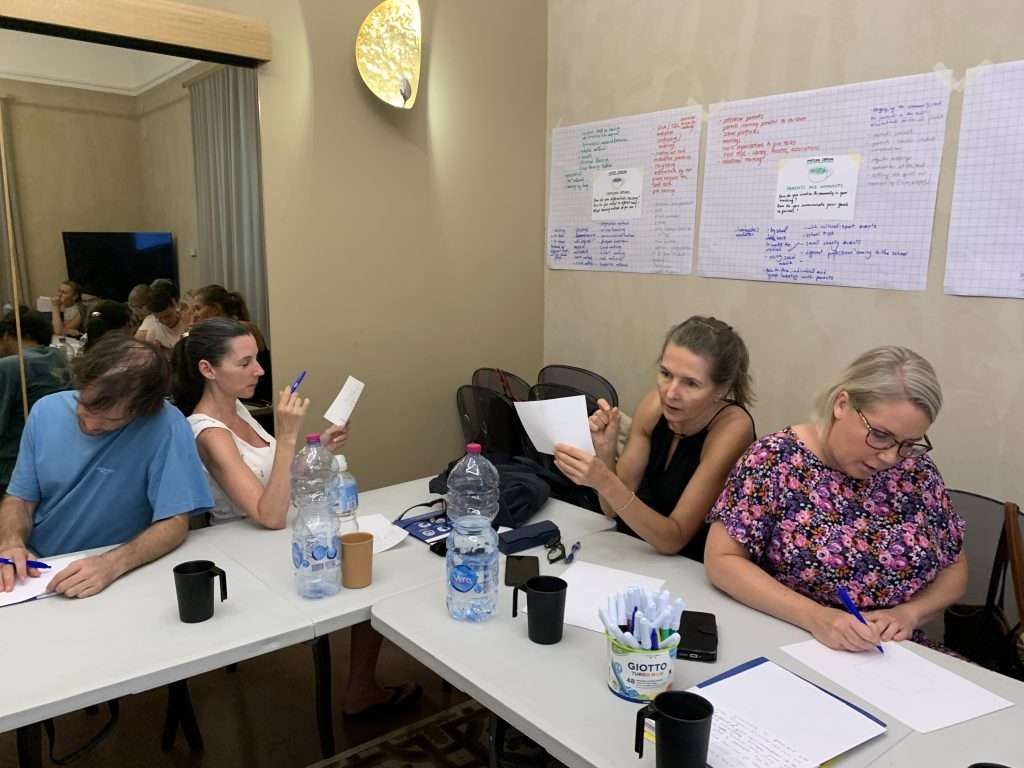
The course started with acknowledging the importance of the concept of identity as a first step to go deep into diversity. From a visual activity, our participants thought about their own identity and the relation that identity has with culture. This allows the group to debate and to discover the theory of cultural intelligence to build an understanding of what “intercultural learning” means to them.
Next, participants engaged in a storytelling exercise about stereotypes. Altogether we discovered the meaning of the vicious cycle of stereotypes. They were invited to reflect about how stereotypes can convert into prejudices and discrimination, generating a vicious cycle that strengthens stereotypes. As put in an inspirational TED Talk we saw – “Show a people as one thing — as only one thing — over and over again, and that is what they become.”
The last topic we worked on was inclusão. First, participants have been involved in simulation activities to acknowledge and discuss about the challenges of comunicação intercultural. The activities can help students questioning common assumptions while thinking about finding connections among different cultures. Another round of group activities was performed around the concept of membership and empathy. The group challenges proposed can be adapted to different subject and classroom activities, allowing students to understand the importance for every member of the class to bring valuable contributions and to empathize with other classmates’ needs and diversities.
During the course we worked on the exploration of the link between culture and education. Participants got involved into some activities to become more aware of how cultures influence teaching e estilos de aprendizagem. The goal of the exercise was to think about the attention and sensitivity that teachers need when specific cultural patterns arise in the classroom.
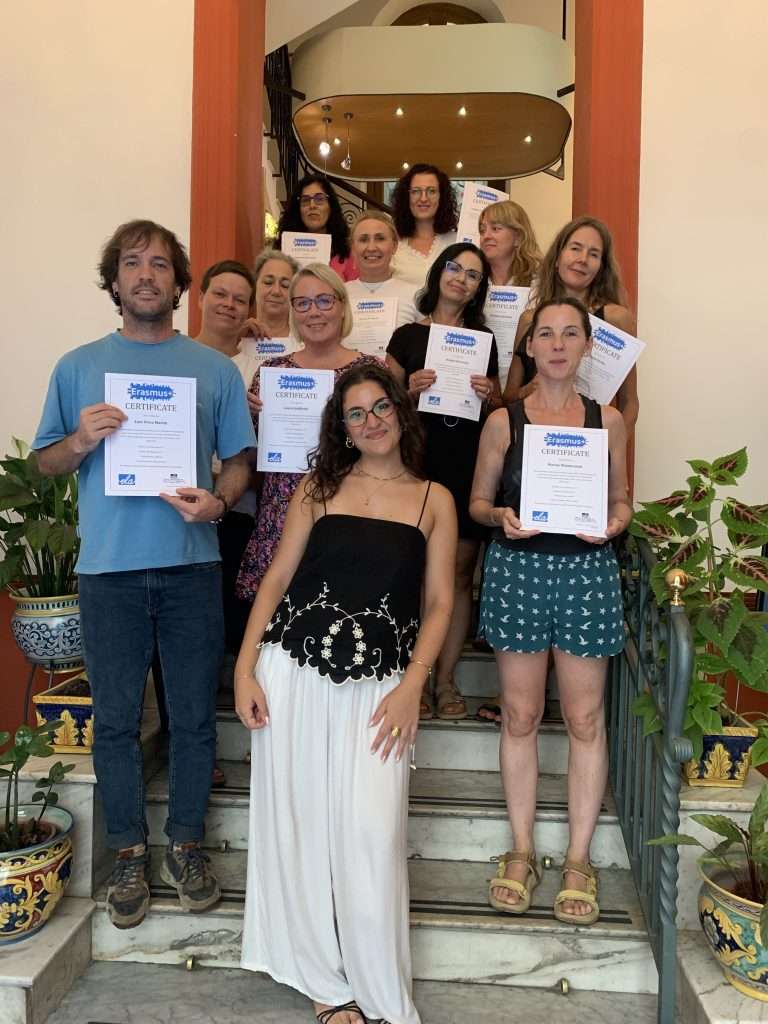
As part of the learning process and the (inter) cultural offer of the course, participants had the chance to share experiences and to debate about them, making them even more eager and curious to put the knowledge gained in the classroom into action while discovering the city and interacting with our locals.
Saiba mais sobre este curso aqui.
Where this course took place: Erasmus courses for teachers in Palermo
Planning your own Erasmus+ course? Descarregue o catálogo de cursos 2026-2027
 English (UK)
 Español
 Italiano
 Deutsch
 Română
 Български
 Čeština
 Ελληνικά
 Polski
 Português
 Français