Teaching sustainability today means helping students understand how global challenges connect to their daily lives. It’s not just about explaining concepts like climate change — it’s about giving learners the tools to think critically, act responsibly, and feel that their choices matter.
From 17 to 23 May 2026, a group of educators gathered in Athens for the course “Green skills for education: promoting environmental awareness and sustainable actions in the classroom.” The participants came from a wide range of schools and countries: Nathalie, Yves, and Cécile (Collège Gérard Philipe, France); Ana Sofia (Agrupamento de Escolas de Silves, Portugal); Chiara (IC Busalla-Casella, Italy); Paul (Lycée technique pour professions éducatives et sociales, Luxembourg); Asta and Rasa (Prezidentas Antanas Smetona Gymnazium, Lithuania); and Alexandre, Diogo, and Rui (Escola Secundária Marquês de Pombal, Portugal).
The week opened with school presentations and a cultural introduction to Athens, creating a relaxed space for participants to get to know each other and start exchanging ideas from day one.
The first full day focused on what “green skills” actually mean in education. Through group discussions y collaborative activities, participants explored sustainability, key environmental concepts, and the role of teachers in shaping awareness. A personal “Green Action Journal” was introduced as a way to reflect on learning throughout the week, while interactive tasks encouraged both engagement and connection within the group.
On Tuesday, the focus shifted outdoors. Participants took part in movement-based challenges y un structured exploration activity that demonstrated how educación ambiental can be active and hands-on. These experiences were then linked to larger frameworks such as the Sustainable Development Goals and long-term climate targets, helping connect classroom practice with global priorities.
After an intensive start, Wednesday offered a break — time to recharge, reflect informally, and continue conversations in a more relaxed setting.
Thursday moved into more in-depth topics, including carbon and ecological footprints, as well as the difference between reducing environmental impact and adapting to change. Through case studies and group work, participants explored the root causes of environmental issues and discussed what a more sustainable school might look like. A role-play activity added another layer, challenging participants to respond to uncertain situations and think flexibly.
The final day brought everything together with a focus on critical thinking. Participants examined how to identify misleading environmental claims and guide students in doing the same. Discussions and structured debates encouraged deeper reflection, while an introduction to project-based learning offered practical ways to turn ideas into classroom activities.
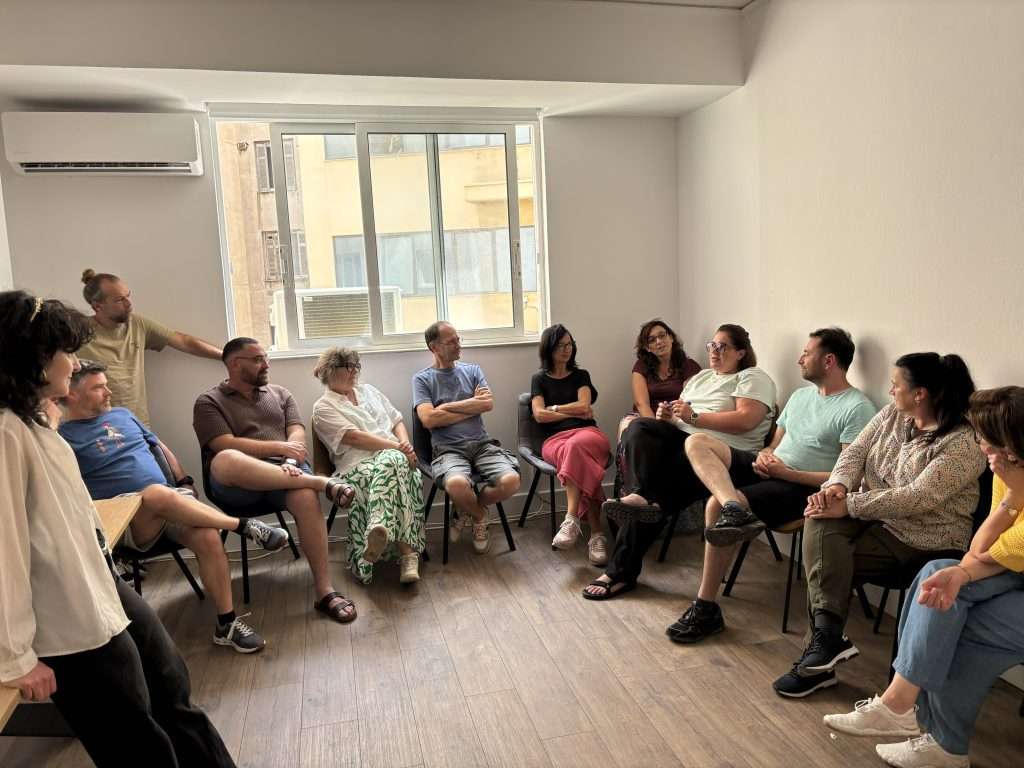
Working in groups, participants designed their own “green school” project concepts, applying what they had learned throughout the week. The course closed with a final reflection, feedback session, and a small ceremony that marked the end of an intensive but collaborative experience.
By the end of the week, participants had not only explored new content but also experienced different ways of teaching — more interactive, reflective, and student-centred. Just as importantly, they left with practical ideas and a clearer sense of how to approach sustainability in the classroom: not as a distant topic, but as something concrete, engaging, and part of everyday learning.
Más información sobre este curso Here
Where this course took place: Erasmus courses for teachers in Athens
Planning your own Erasmus+ course? Descarga el catálogo de cursos 2026-2027
 English (UK)
 Español
 Italiano
 Deutsch
 Română
 Български
 Čeština
 Ελληνικά
 Polski
 Português
 Français