What does it take to truly support students today? Beyond lesson plans and curriculum goals, teachers are increasingly expected to guide, motivate, and connect. This shift towards a more human-centred approach to education was at the core of the training course “Coaching Skills for Teachers, School and Adult Education Staff”, held in Porto from 3 to 9 May 2026.
The course brought together a varied group of educators: Viktoria and Dadatsi from the 2nd Interdisciplinary Assessment, Counseling and Support Centre of East Thessaloniki (Greece); Emelie, Camilla and Johanna from Högadalsskolan (Sweden); Jayentie from Cals College IJsselstein (Netherlands); Hans-Peter from the University of Education Salzburg Stefan Zweig (Austria); and Maria from IES Carrus Elche (Spain). Working across different sectors and age groups, participants shared experiences and explored how coaching skills can fit into their everyday teaching practice.

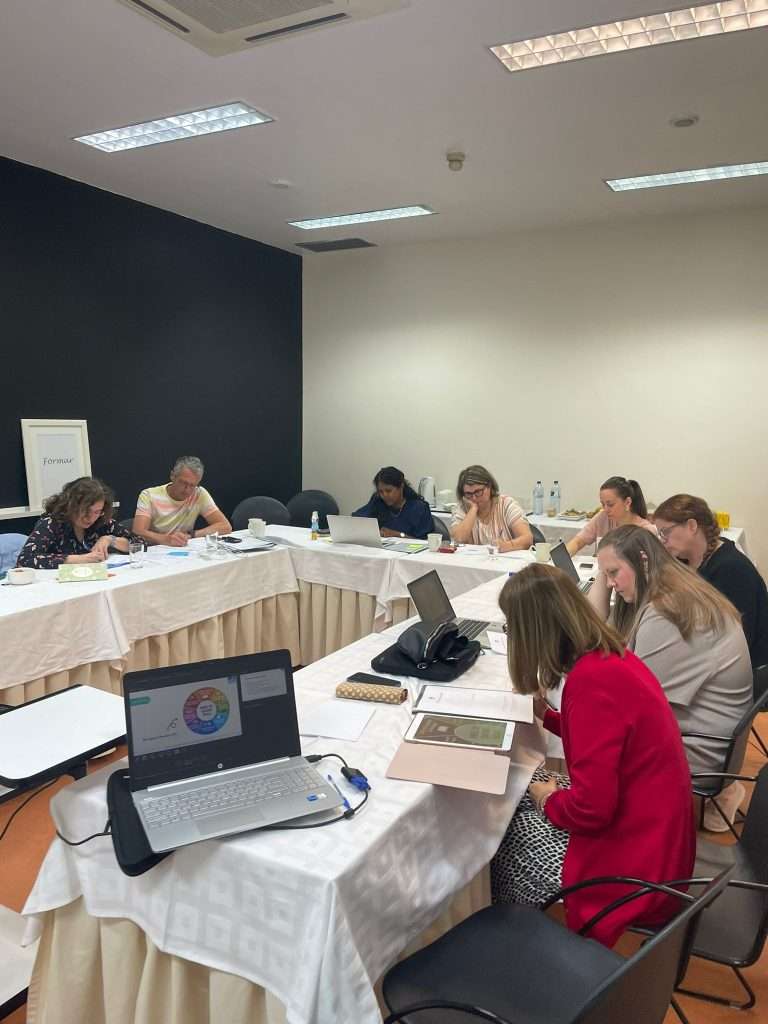
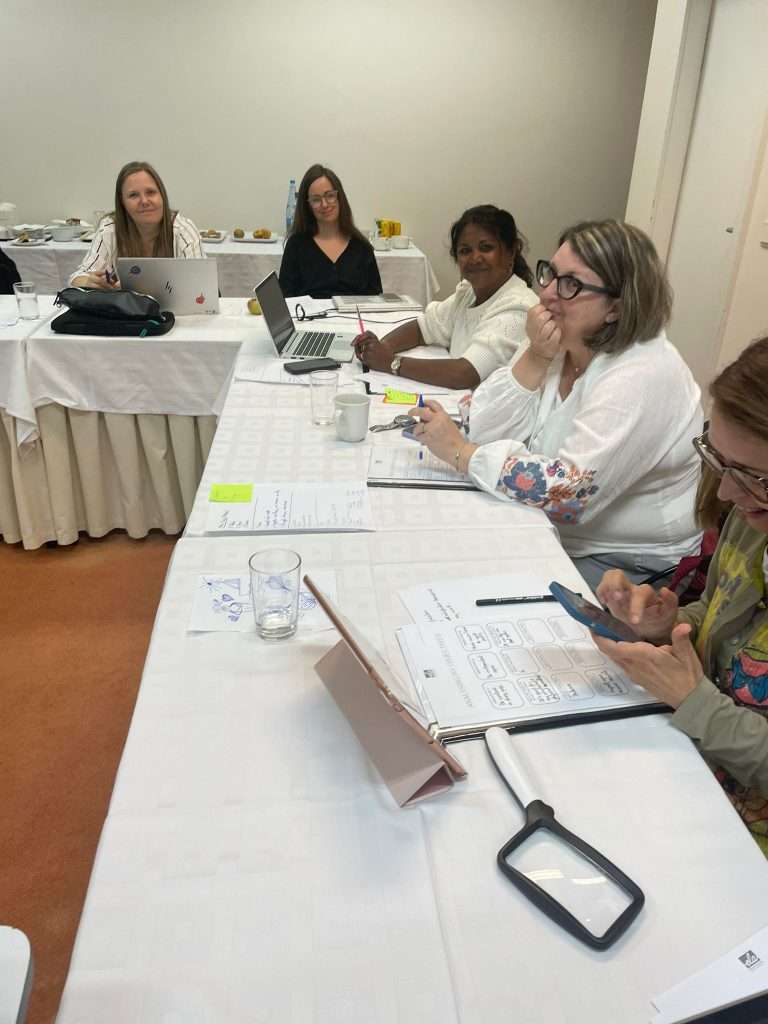
The first part of the week focused on understanding coaching and reflecting on the teacher’s role. Participants explored the difference between teaching and coaching, and what it means to support students without always giving direct answers. Through self-reflection activities and practical tools, they considered their own habits, mindset, a wellbeing, setting the tone for a more aware and intentional approach to teaching.
Building on this foundation, the group moved into emocionální inteligence. Sessions explored how emotions shape behaviour, learning, and relationships in the classroom. Participants looked at common barriers to empathy and discussed ways to better understand students’ perspectives. Alongside this, they worked on self-motivation and practical strategies for managing time and priorities in a busy school environment.
Midweek, the focus shifted to konflikt — a familiar challenge in any educational setting. Rather than seeing it as something to avoid, participants learned how to approach conflict as a chance for dialogue and growth. They explored structured ways to analyse situations, practiced communication techniques, and reflected on their role in helping students navigate disagreements independently.
The following sessions centred on communication and feedback. Participants explored how mindset influences learning, especially when dealing with mistakes or challenges. Through interactive activities, they practiced giving feedback that encourages progress and confidence. Collaborative exercises also invited them to look at situations from different angles, broadening their perspective as educators.
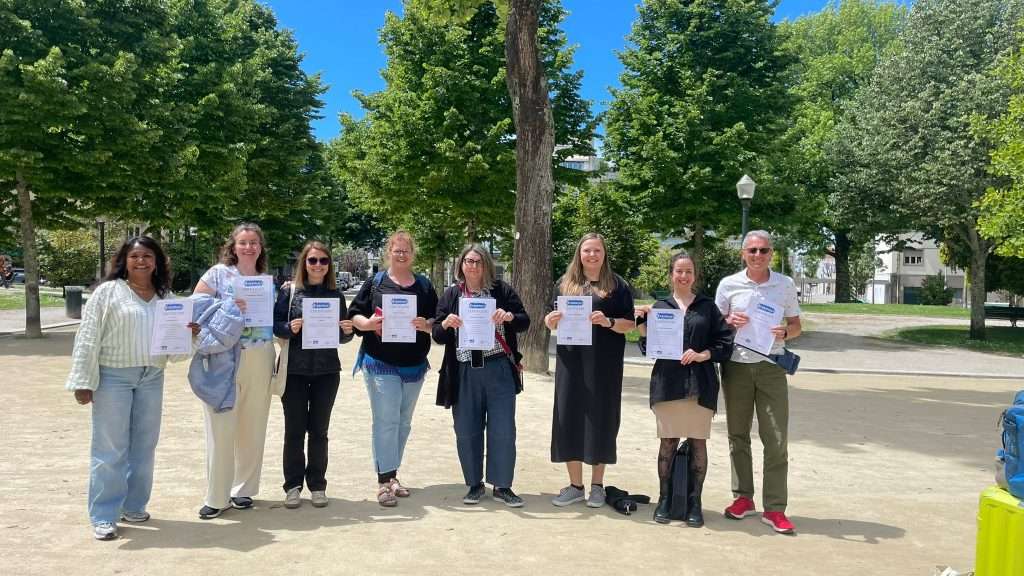
In the final stage of the course, everything came together through the use of questions. Participants discovered how thoughtful questioning can guide reflection, support problem-solving, and strengthen student autonomy. Combined with techniques like paraphrasing and facilitation, this approach reinforced a more supportive and less directive teaching style.
By the end of the week, participants left with practical tools and a clearer sense of how small changes can make a difference. Whether through listening more carefully, asking better questions, or creating space for student voice, the course highlighted how coaching skills can lead to more meaningful learning experiences.
Zjistěte více o tomto kurzu zde.
Where this course took place: Erasmus courses for teachers in Porto
Planning your own Erasmus+ course? Stáhněte si katalog kurzů 2026-2027
 English (UK)
 Español
 Italiano
 Deutsch
 Română
 Български
 Čeština
 Ελληνικά
 Polski
 Português
 Français