Nowadays, the role of teachers goes far beyond delivering academic knowledge. In addition to academic qualifications, teachers are increasingly expected to support students’ personal, social and emotional development. For this reason, coaching skills have become an essential part of effective teaching. By using coaching techniques such as active listening, goal setting, constructive feedback and motivation, teachers can help students reach their full potential. Therefore, combining academic expertise with coaching skills allows teachers to create a more supportive learning environment and foster students’ independence, confidence and lifelong learning skills. Although these roles seem different, they are complementary.
The concept of coaching was fundamental during the new edition of the course “Emotional intelligence and coaching inside the school and educational context” which took place in Palermo from 13/09/2026 to 19/09/2026. The participants came from all across Europe, with Evelina, Eglė, Raminta and Daiva from Marijampolės Petro Kriaučiūno viešoji biblioteka in Lithuania, Silvio from 17 Liceum Ogólnokształcące Społeczne in Poland, Réka from Barcsi Széchényi Ferenc Gimnázium és Kollégium in Hungary and Nadja from Landesamt für Schule und Bildung in Germany.
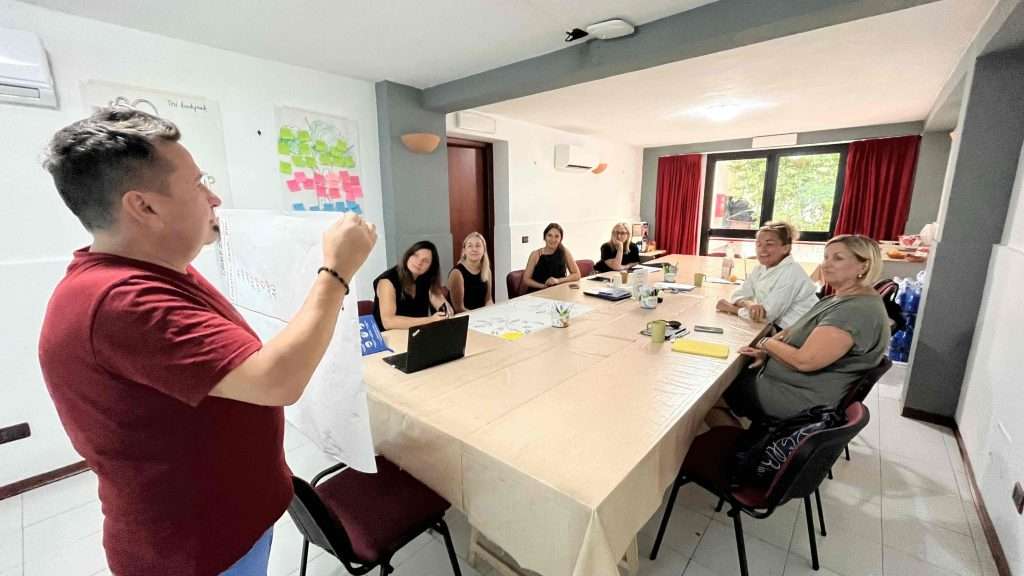
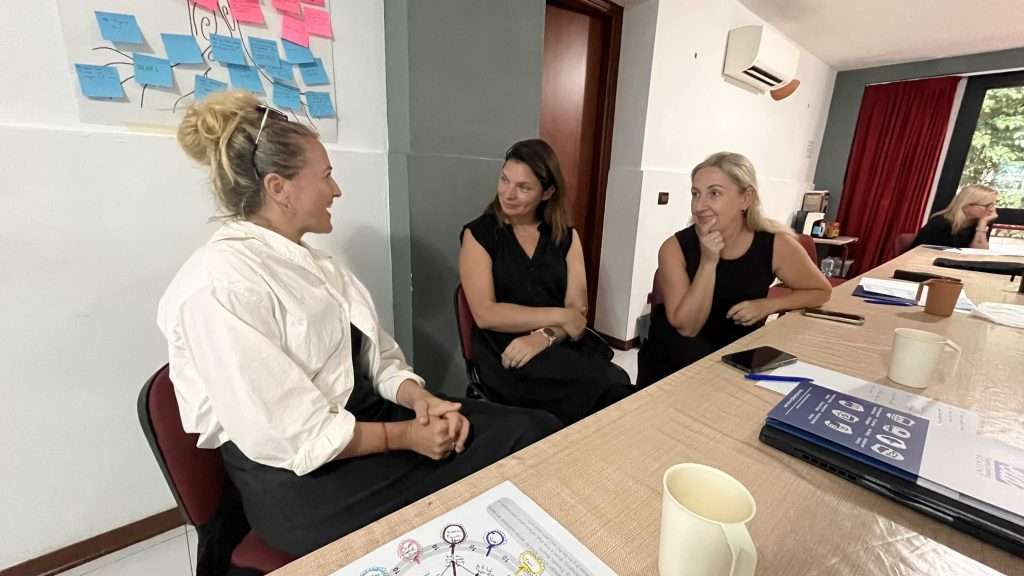
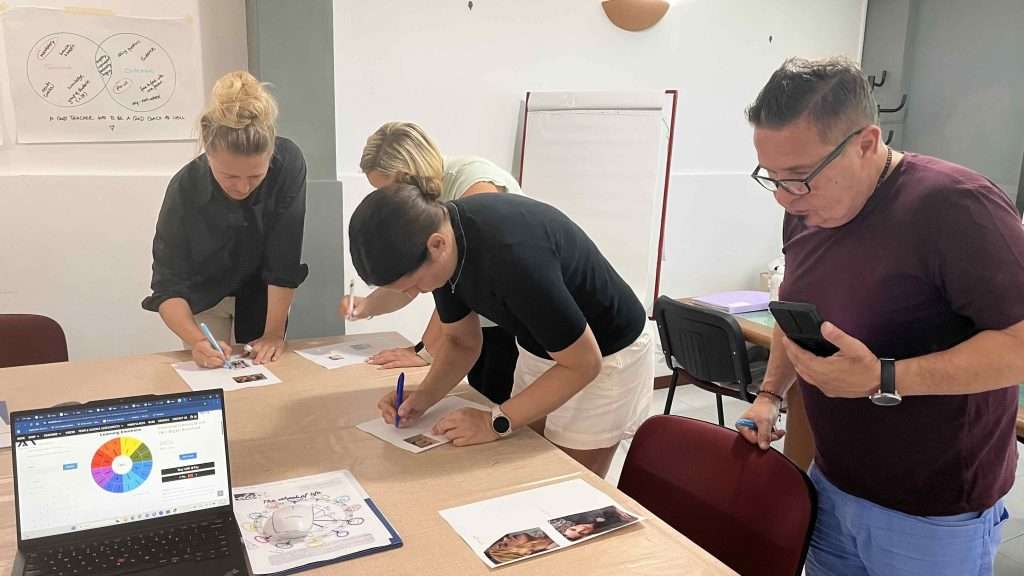
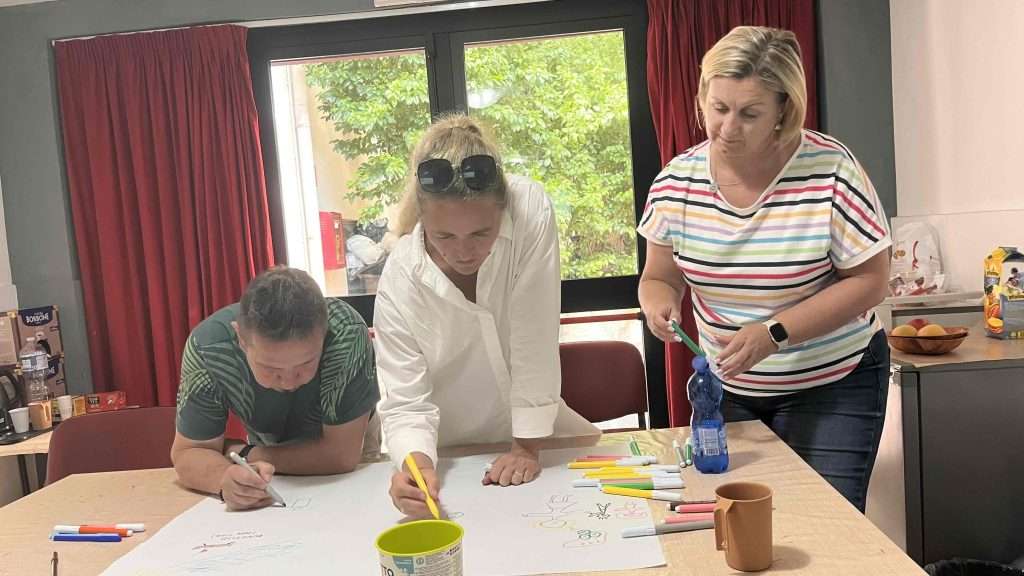
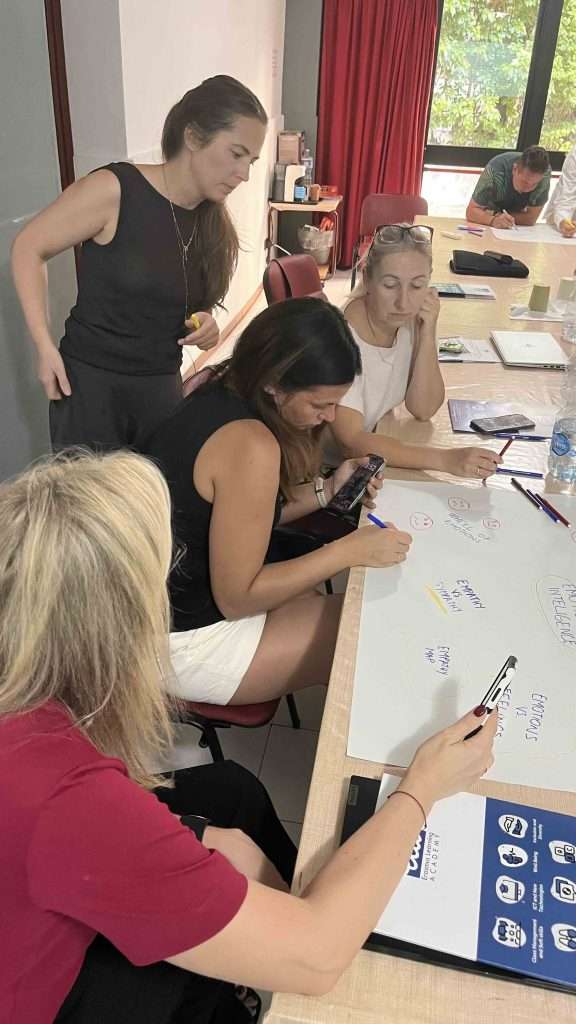
The course initiated by a general introduction of “Coaching” that means motivating and influencing others to become the best version of themselves. In order to improve these skills, it is essential to learn how to set goals, specifically SMART goals. During the course, participants were asked to set SMART goals by following the guidelines of being specific, measurable, achievable, realistic and time-bound.
The first topic discussed in the course was the power of questions. Questions have the ability to promote thinking and self-reflection, to create constructive answers and to motivate actions and ideas development. This is why in this course the participants explored how to build learning-focused questions by starting with an inviting engagement, proposing content to reflect on and highlighting a cognitive focus for thinking and elaboration.
Another topic tackled during this course was Emotional Intelligence. This term indicates the ability to recognize not only our own feelings but also other people’s emotions, in order to be aware of ourselves and our surroundings. A teacher that is emotionally intelligent is capable of understanding its students’ emotions and therefore create a connection with them and help them in managing their feelings.
Another coaching skill that is essential inside every workplace, including a classroom, is the ability to manage conflict. In this case self-awareness and control of our own emotions are fundamental in order not to let a conflictual situation escalate. Conflicts don’t have to be necessarily negative, on the contrary they can also lead to growth and positive outcomes. A Coach has to help their pupils/students to create a dialogue and support them in finding a solution to the problem. It is important to remember though that the role of the coach is not to suggest or provide solutions, but to be a guide in the analysis of the conflict, the decisionmaking process and the evaluation of their behavior in order to facilitate the process of finding solutions by themselves in their own way.
And then the course was closed by navigating feedback as a fundamental part of creating a supportive and effective classroom environment. When delivered with empathy, clarity, and respect, it helps students recognize their strengths, understand areas for improvement, and develop greater self-awareness and motivation. In the context of emotional intelligence and coaching, teachers can manage feedback by focusing on specific behaviors rather than personal judgments, encouraging dialogue, and creating a safe space where students feel comfortable receiving and giving feedback. This approach transforms feedback from a simple evaluation into a powerful tool for learning, personal growth, and stronger teacher–student relationships.
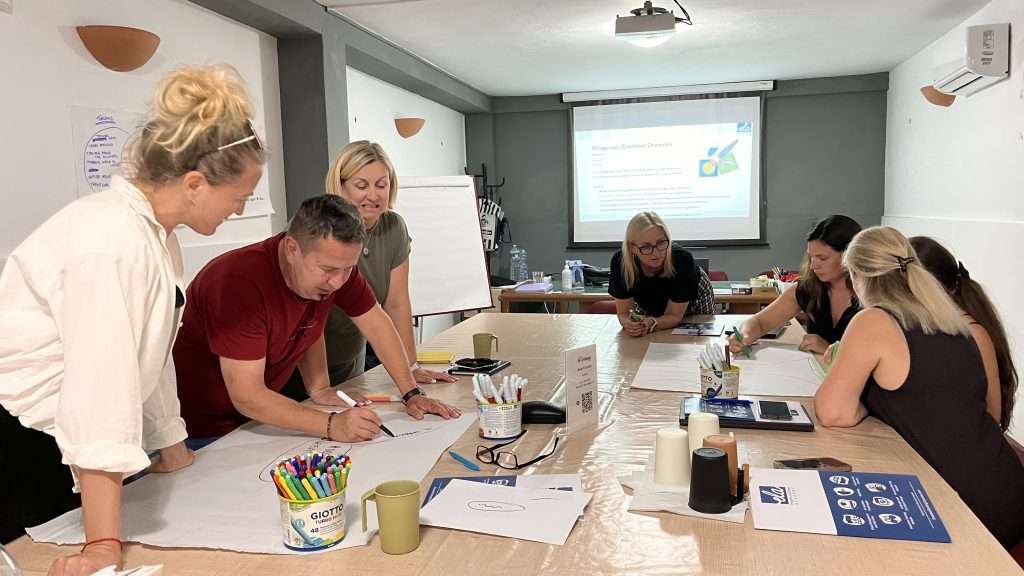
This training week allowed the participants to share common experiences and to learn from different cultural backgrounds, while also improving their coaching skills and learning about useful tools that can be applied to classroom management and everyday teaching practice.
Descoperiți mai multe despre acest curs aici.
Where this course took place: Erasmus courses for teachers in Palermo
Planning your own Erasmus+ course? Descarcă catalogul de cursuri 2026-2027
 English (UK)
 Español
 Italiano
 Deutsch
 Română
 Български
 Čeština
 Ελληνικά
 Polski
 Português
 Français