Hoy en día es fácil sentirse abrumado y pensar que no podemos hacer frente a nuestras tareas diarias. Las situaciones estresantes pueden manifestarse tanto en nuestra vida profesional como en la personal, y puede resultar difícil evitar los conflictos cuando nos encontramos en un entorno estresante. En este curso, los participantes tuvieron la oportunidad, a través de actividades teóricas y prácticas, de conocer las herramientas necesarias para gestionar y superar los conflictos y las situaciones estresantes.
The new edition of the course “Stress and Conflict Management: the way to resilience and satisfaction” took place in Tenerife de 24/05/2026 to 30/05/2026. The participants came from all across Europe, with Adél from Arany János Református Gimnázium és Kollégium in Hungary; Amrah from Gottlieb-Daimler-Schule 2 in Germany; Elisa from Enac Ente Nazionale Canossiano ETS in Italy; Aleksandra, Ewelina and Elżbieta from Zespół Poradni Psychologiczno-Pedagogicznych from Poland; Ingrid and Fadimana from Carlo-Schmid-Oberschule in Germany; Alessia from Istituto Comprensivo “Egidio Carella” Pianello Val Tidone in Italy; Francisca from Agrupamento de Escolas de Vilela in Portugal; Martha-Christina from I.I.S. “Gandhi” Merano/Meran in Italy; Vesa from Espoon seudun koulutuskuntayhtymä Omnia in Finland; and Monika and Kateřina from SZŠ a VOŠz Nymburk in Czech Republic.
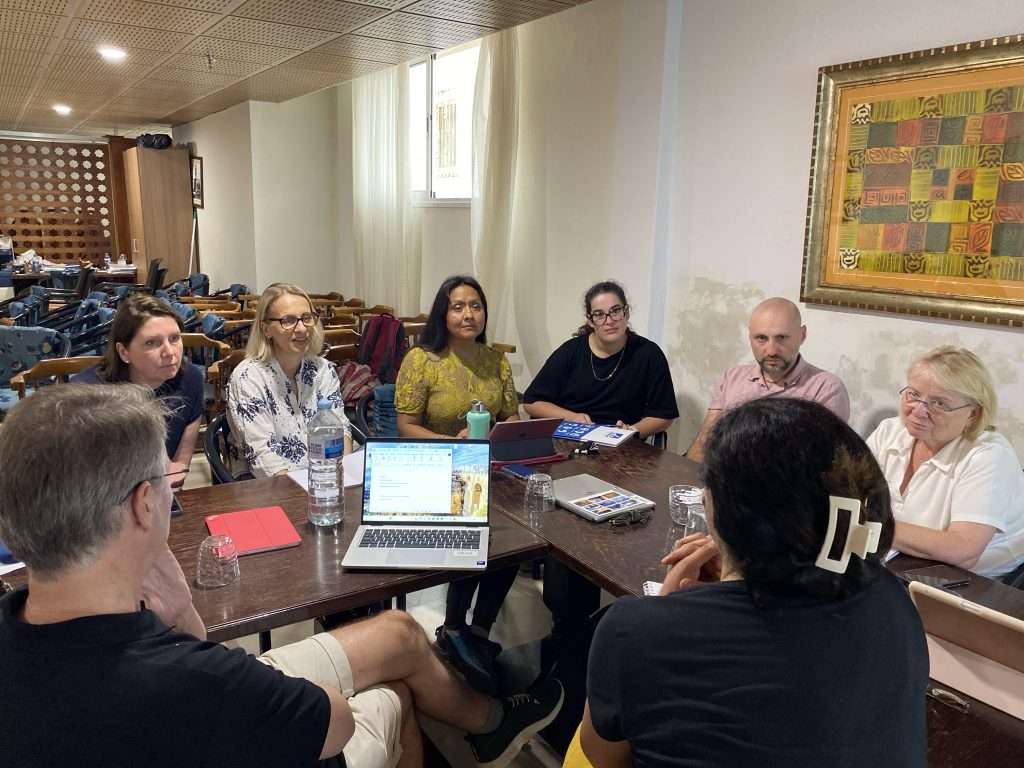
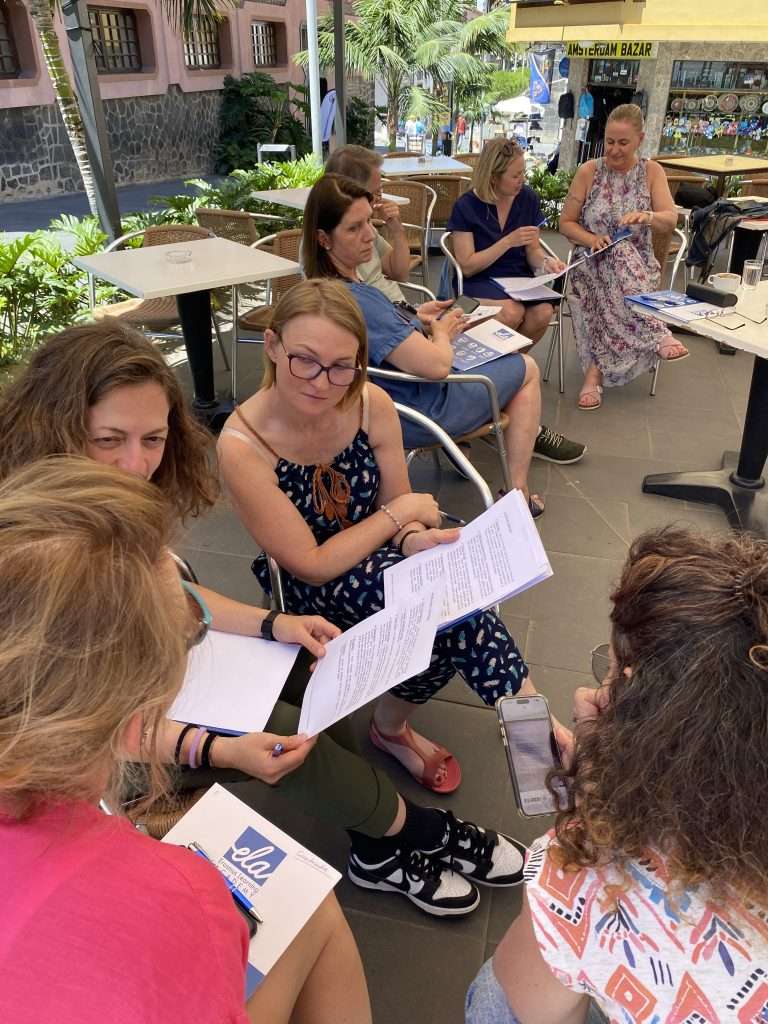
On the first day, participants explored the concept of stress through group brainstorming activities. They discussed how stress can arise from a variety of stressors, including physical, environmental, family-related, and work-related factors. At the same time, they learned that stress is not always harmful, as moderate levels of stress can motivate individuals to achieve objectives, meet deadlines, and improve performance. For this reason, participants were introduced to the distinction between Distress, which has negative effects, and Eustress, which can have positive and motivating outcomes.
Throughout the course, participants became familiar with a range of cognitive and behavioural techniques aimed at managing stress in the workplace. Through collaborative exercises, they strengthened their planning and time-management abilities. To improve their capacity to cope with challenging situations, they also practiced breathing techniques, progressive muscle relaxation, and visualisation exercises.
Empathy was another key topic addressed during the training, as it plays a crucial role in conflict management. Participants reflected on the challenges of responding empathically, particularly when they have not personally experienced the emotions of another individual. Through practical activities and discussions, they learned how to recognize empathy and distinguish it from other forms of interpersonal responses.
Effective communication was also presented as an essential element in conflict resolution. Participants examined different communication styles and took part in a group exercise where each person contributed to resolving a conflict scenario. While conflict resolution can be demanding, the activity demonstrated that conflicts can also create opportunities for personal growth, learning, and stronger collaboration. Participants discussed how these approaches can be applied both in professional environments and educational settings.
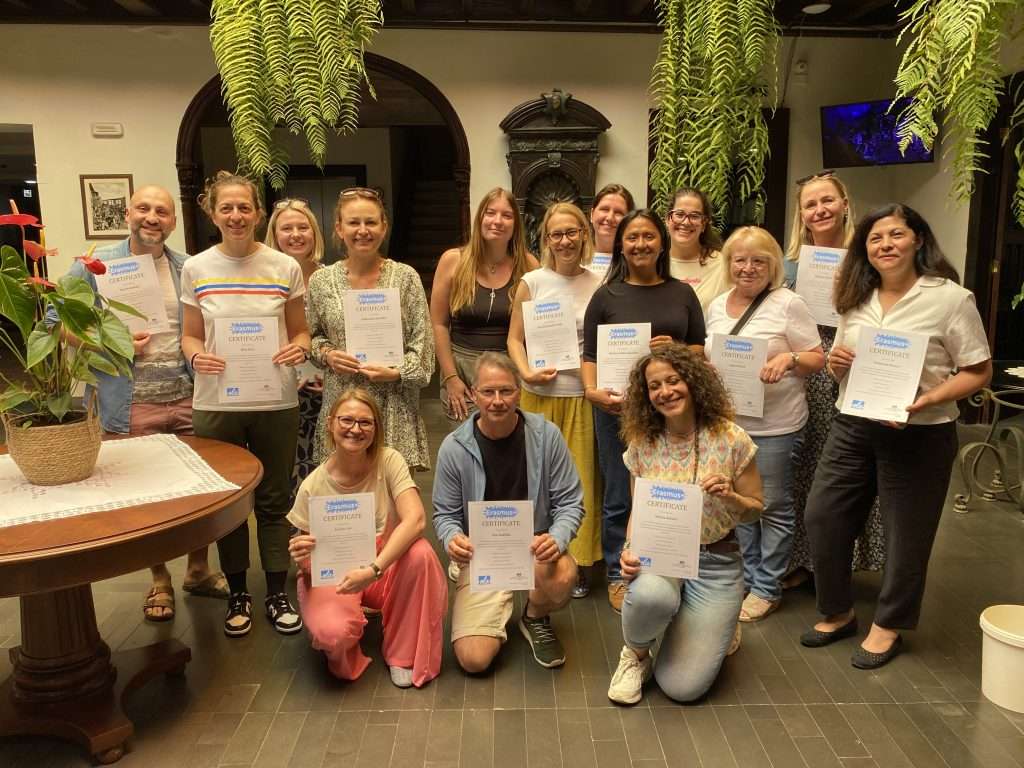
The final topic explored during the course was mindfulness, defined as the practice of remaining fully present and observing thoughts, emotions, and experiences without judgment. Participants learned how mindfulness can enhance concentration, self-awareness, and emotional regulation. They were also introduced to mindfulness-based stress reduction techniques commonly used to support mental well-being and stress management. Through guided mindfulness exercises and meditation practices, participants developed greater awareness of their senses, thoughts, and emotions, helping them cultivate a stronger sense of presence in everyday life.
As the participants came from diverse cultural backgrounds, the course provided valuable opportunities for exchange, reflection, and mutual learning. By sharing experiences and perspectives, they gained a deeper understanding of different approaches to managing stress and conflict. Most importantly, the training highlighted that individuals possess practical tools to address stressful situations and that conflicts, when approached constructively, can often lead to positive outcomes and personal development.
Más información sobre este curso aquí.
Where this course took place: Erasmus courses for teachers in Tenerife
Planning your own Erasmus+ course? Descarga el catálogo de cursos 2026-2027
 English (UK)
 Español
 Italiano
 Deutsch
 Română
 Български
 Čeština
 Ελληνικά
 Polski
 Português
 Français