Play has long been an essential element of human growth, influencing the way we think, imagine, interact and tackle challenges from childhood through adulthood. When we think back to our favourite pastimes—whether treasure hunts, board games, puzzles or simple outdoor activities—the feeling is always familiar: we never really lose interest in them. This enduring enthusiasm is rooted in intrinsic motivation, a powerful force that makes learning more meaningful, enjoyable and lasting.
With this perspective in mind, a new edition of the course “Descubra el poder del aprendizaje basado en juegos y la gamificación en la educación”se celebró en Tenerife de 19/04/2026 to 25/04/2026. It brought together an enthusiastic group of professionals from across Europe, including Tjaša from Glasbena šola Ribnica in Eslovenia, Erzsébet and Zoltán from Aszódi Evangélikus Petőfi Gimnázium, Általános Iskola és Kollégium in Hungría, Romana and Monika from VIAC – Institute for youth support and development in Slovakia, Emanuela from I.I.S “Pietro Scalcerle” in Italia, Andreas from Bergen Katedralskole in Noruega and Julie from Lycée Professionnel Voltaire in France.
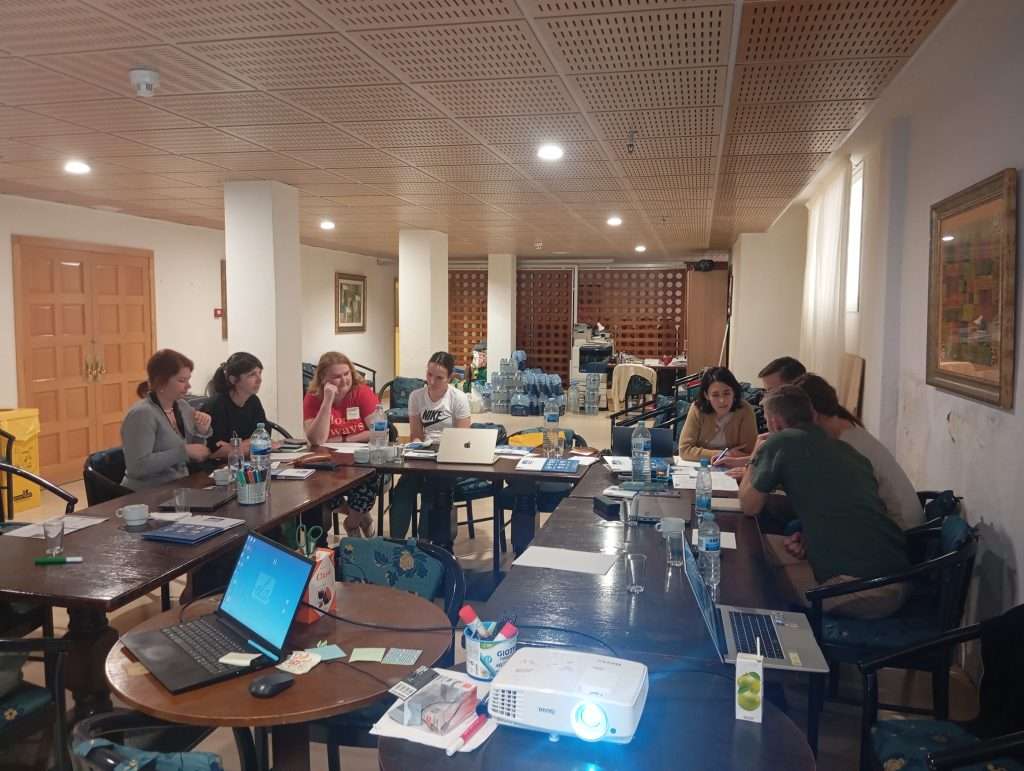

The programme opened with activities aimed at introducing the basics of gamification, beginning with the creation of digital avatars as a fun yet meaningful way for participants to get to know each other. They explored how elements such as points, challenges, rewards, levels and storytelling can be integrated into everyday teaching to boost engagement and motivation. The next day focused on understanding the key difference between Game-Based Learning and Gamification, considering how full games can act as learning tools while gamified features can enhance traditional teaching tasks. Through discussion and shared experiences, participants reflected on the advantages, challenges and classroom applications of both approaches.
As the training progressed, sessions became increasingly hands-on, with participants designing and testing both digital and physical escape rooms, quests and problem-solving activities. These experiences demonstrated how playful tasks can improve collaboration, develop critical thinking and keep learners actively involved. Later in the week, the focus moved towards adventure and experiential learning, encouraging participants to explore more dynamic ways of incorporating storytelling, movement and discovery into their lessons. Through practical activities based on gamification principles, they saw how these methods can deepen understanding and make learning more memorable.


In the final stage of the course, participants reviewed and consolidated the most effective tools and strategies for applying gamification in their own classrooms, sharing ideas adaptable to different subjects, age groups and learning contexts. The overall atmosphere was both thoughtful and inspiring, leaving participants with renewed energy and a variety of practical approaches to implement back home. This edition of the course not only introduced métodos innovadores but also reinforced the idea that when learning resembles play, students become naturally more engaged, curious and motivated—showing how game-based strategies can truly reshape the learning experience
Más información sobre este curso aquí.
Where this course took place: Erasmus courses for teachers in Tenerife
Planning your own Erasmus+ course? Descarga el catálogo de cursos 2026-2027
 English (UK)
 Español
 Italiano
 Deutsch
 Română
 Български
 Čeština
 Ελληνικά
 Polski
 Português
 Français