Nowadays it is common to feel overwhelmed and to think that we are unable to keep up with our everyday responsibilities. Stressful situations can appear in both our professional and personal lives, and avoiding conflict can be challenging when we are surrounded by pressure. In this course, participants had the opportunity to explore—through theoretical input and practical exercises—different tools and strategies to manage and overcome conflict and stressful situations.
A nova edição do curso “Gestão do stress e dos conflitos: o caminho para a resiliência e a satisfação” teve lugar em Tenerife de 08/03/2026 para14/03/2026. The participants came from all across Europe, with Zlatka from Zdravstveno učilište in Croatia, Dalila and Massimiliano from I.S Carlo Dell’acqua, Michele from Associazione Territoriale per l’ integrazione Passo Passo ODV in Italy, Elske and Geraldine from GRETB FET Centre in Ireland, Ilona and Irina from Universidade Técnica de Riga in Latvia, Alisa from International School of Vantaa in Finland, Fjóla and Hildur from Menntaskólinn við Sund in Iceland, Els, Ine and Ruben from GO! Scholengroep Wijs na Bélgica.
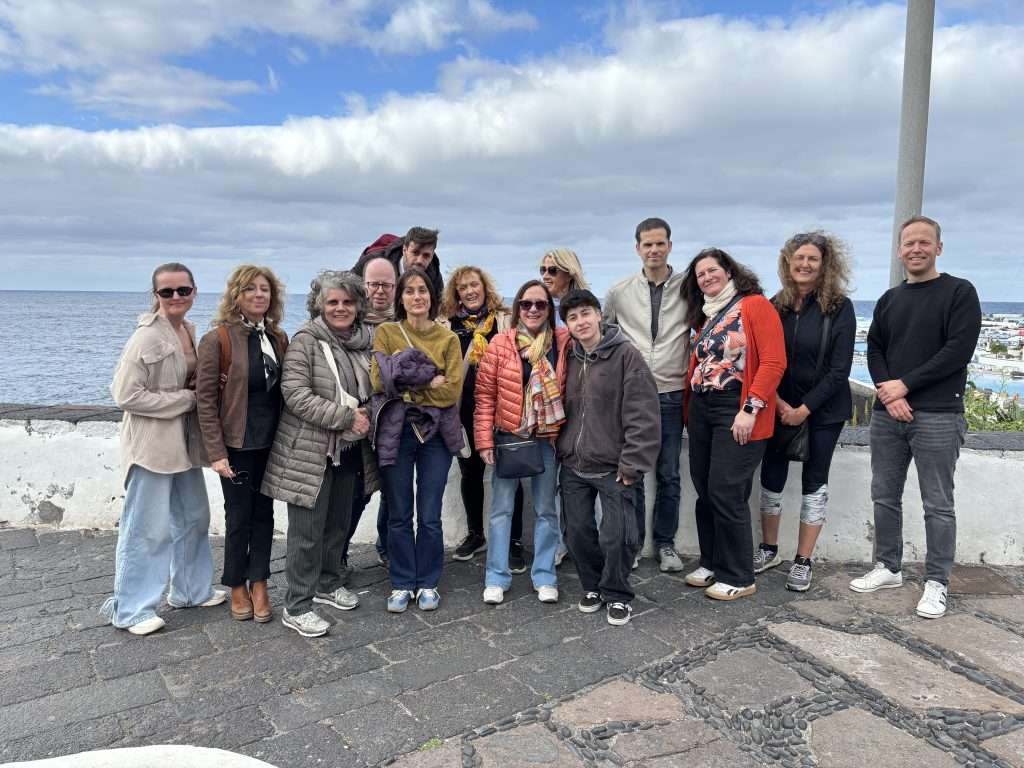
On the first day, participants explored the concept of stress by sharing ideas and brainstorming in groups. They discussed how stress can be triggered by different stressors related to physical conditions, environmental factors, family life or work responsibilities. At the same time, they reflected on how a moderate level of stress can sometimes have positive effects, such as motivating us to reach our goals or meet deadlines. For this reason, participants learned to differentiate between Distress (negative stress) and Eustress (positive stress).
Throughout the course, participants discovered several cognitive and behavioural strategies that can help deal with stressful situations in the workplace. Through collaborative activities they were able to strengthen their planning abilities and improve their time management skills. To better cope with stress, they also practiced breathing techniques, muscle relaxation and visualisation exercises.
Empathy was another important topic addressed during the course, as it plays a key role in managing conflicts effectively. Responding with empathy is not always easy, particularly when we have not experienced the same emotions as the person we are interacting with. Nevertheless, empathy can be developed with practice, and participants learned how to recognise it and distinguish it from other types of reactions.
Effective communication was also highlighted as an essential element in conflict resolution. Participants explored different communication styles and took part in a group activity where each member contributed to solving a simulated conflict. Even though resolving conflicts can be challenging, the activity showed how these situations can also create opportunities for learning, cooperation and personal growth. This approach can be useful both in the workplace and in the classroom.
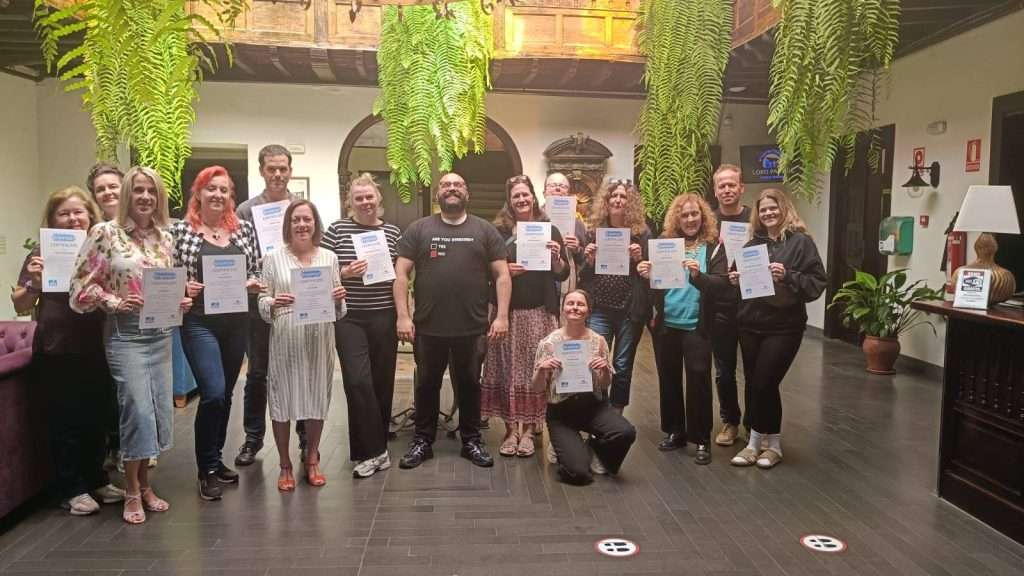
The final topic explored during the course was mindfulness, which refers to the practice of being fully present and aware of our thoughts and experiences without judging them. This practice helps improve concentration, self-awareness and emotional regulation. Mindfulness-based stress reduction is widely used as a method for coping with stress and supporting mental well-being. Participants also engaged in mindfulness exercises and short meditations to experience these benefits directly.
Because the participants came from different cultural backgrounds, the course also offered a valuable opportunity to exchange perspectives and learn from one another’s experiences. Most importantly, the course helped participants realise that they have practical tools to deal with stressful situations and that, in some cases, conflict can also lead to positive outcomes and personal development.
Saiba mais sobre este curso aqui.
Where this course took place: Erasmus courses for teachers in Tenerife
Planning your own Erasmus+ course? Descarregue o catálogo de cursos 2026-2027
 English (UK)
 Español
 Italiano
 Deutsch
 Română
 Български
 Čeština
 Ελληνικά
 Polski
 Português
 Français