The role of a teacher is to pass on knowledge while helping students build essential skills and abilities. In contrast, a coach focuses on encouraging and guiding learners through attentive listening, meaningful questions, and the introduction of challenges. Although these roles might seem different at first, imagine the effect if educators blended coaching techniques into their teaching, becoming not only instructors but also motivators.
Esta ideia esteve no centro da última edição do curso “ChatGpt e IA para professores: Inteligência Artificial nas escolas e na educação“, realizada em Tenerife de 15/03/2026 para 21/03/2026. Participants arrived from across Europe, including Ian Edmund from Töjnaskolan in Sweden, Ilse and Jo from Heilig Graf in Belgium, Stefania from Istituto Comprensivo III De Amicis in Italy, Stephanie from DS Sofia in Bulgaria, Katarzyna from Centrum Języków Obcych The BEST in Poland, Darius and Lina from Ukmergės Šilo progimnazija in Lithuania Tomas from Gymnázium Viliama Paulinyho-Tótha, Obchodná akadémia a Stredná zdravotnícka škola in Slovakia, Svenja from Neues Gymnasium Wilhelmshaven na Alemanha.
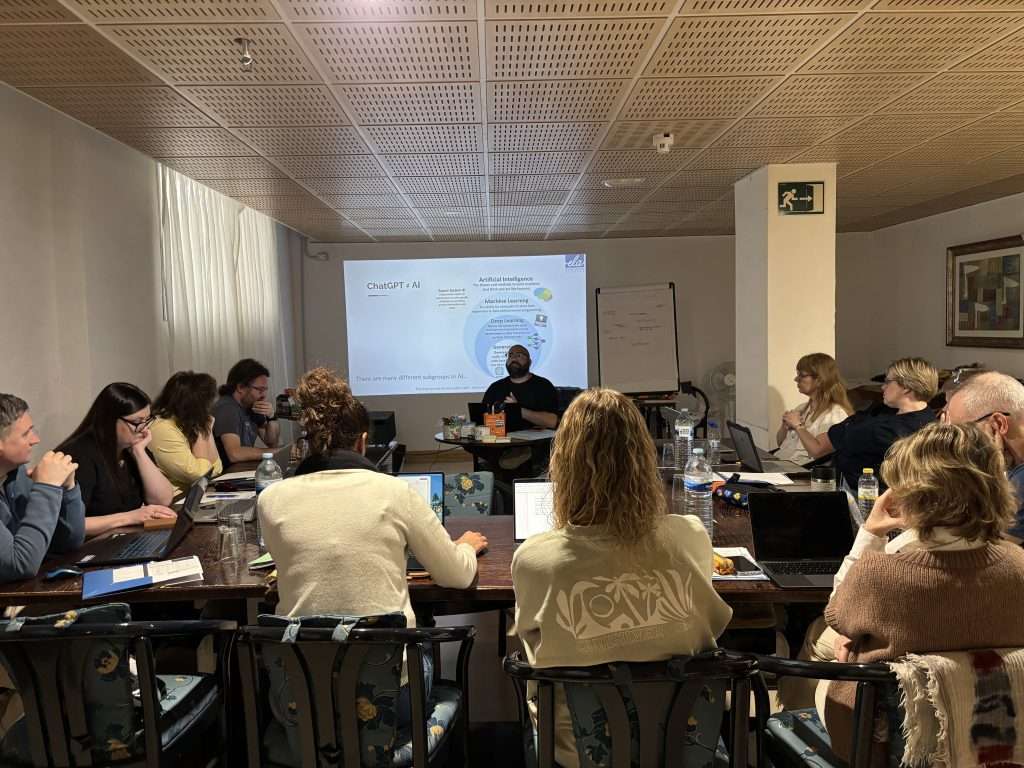
The course began by examining the role of AI in education. This included exploring how artificial intelligence can improve learning by tailoring content to individual needs, automating routine tasks, and offering insights based on data. Participants explored AI-based tools that assist teaching, such as intelligent tutoring systems, automated grading solutions, and adaptive learning environments.
A key area of focus was the importance of crafting prompts when using ChatGPT. Well-designed prompts greatly affect the quality of AI-generated responses, making this an essential skill for teachers. Attendees practiced creating clear and relevant prompts to better integrate ChatGPT into their classroom activities.
Ethical considerations related to AI in education were also addressed. Topics included algorithmic bias, data privacy issues, and the need for well-defined policies regulating AI usage. Understanding these concerns is vital to ensure that AI tools are applied in a fair, transparent, and responsible manner that benefits all learners.
The course also explored the integration of ICT tools with AI functionalities, showcasing applications that promote collaboration, creativity, and critical thinking. Participants were encouraged to experiment with different ICT tools and reflect on how AI enhancements could enrich the learning experience.
Assessment in the context of AI formed another important discussion point. The focus was on developing innovative evaluation methods that use AI for ongoing assessment, provide instant feedback, and support personalized instruction. The potential of AI to make assessment more tailored and effective was strongly highlighted.
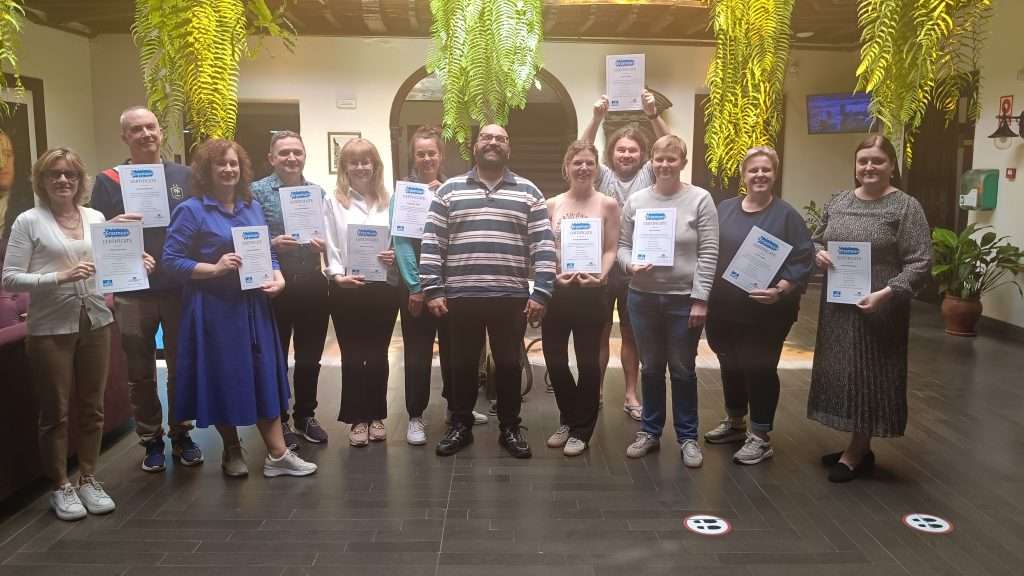
Throughout the week, participants exchanged experiences and perspectives shaped by their diverse cultural backgrounds. This collaborative setting supported the development of both AI-related and coaching skills, while also giving participants the opportunity to consider how to apply these approaches in their own teaching environments.
Saiba mais sobre este curso aqui.
Where this course took place: Erasmus courses for teachers in Tenerife
Planning your own Erasmus+ course? Descarregue o catálogo de cursos 2026-2027
 English (UK)
 Español
 Italiano
 Deutsch
 Română
 Български
 Čeština
 Ελληνικά
 Polski
 Português
 Français