Contact with the natural environment has always played an important role in human development, positively influencing cognitive, emotional, and behavioural growth. Even today, people often feel inspired or deeply affected by spending time outdoors, whether in nature or urban settings. Outdoor education is an innovative teaching approach that not only supports high-quality, long-lasting learning but also promotes awareness of environmental protection in the context of climate change.
Our course, held in Tenerife da 26/04/2026 to 02/05/2026, brought together participants from across Europe, who collaborated, shared experiences, and learned new methods to enrich their teaching practices, including Pedro, Pedro and Luci from Consorzio scolastico Emídio Navarro in Portugal, Ewa, Magdalena and Małgorzata from District Complex of Educational Institutions in Mielec, Eliana and Marta from Zespół Szkół Politechnicznych „ENERGETYK”, Ewelina and Mariola from Zespół Szkół Ponadpodstawowych im. H. Cegielskiego in Poland, Laila from Riga 1st Primary School – Development Center in Latvia, Vincent from Collège René Cassin in France.
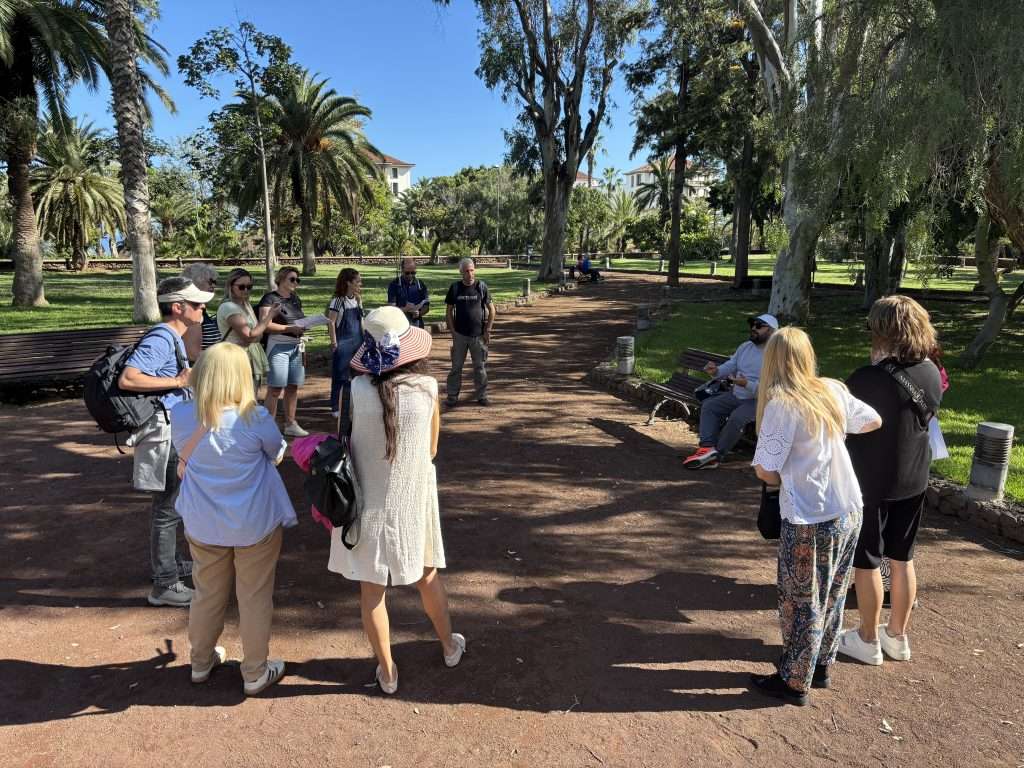
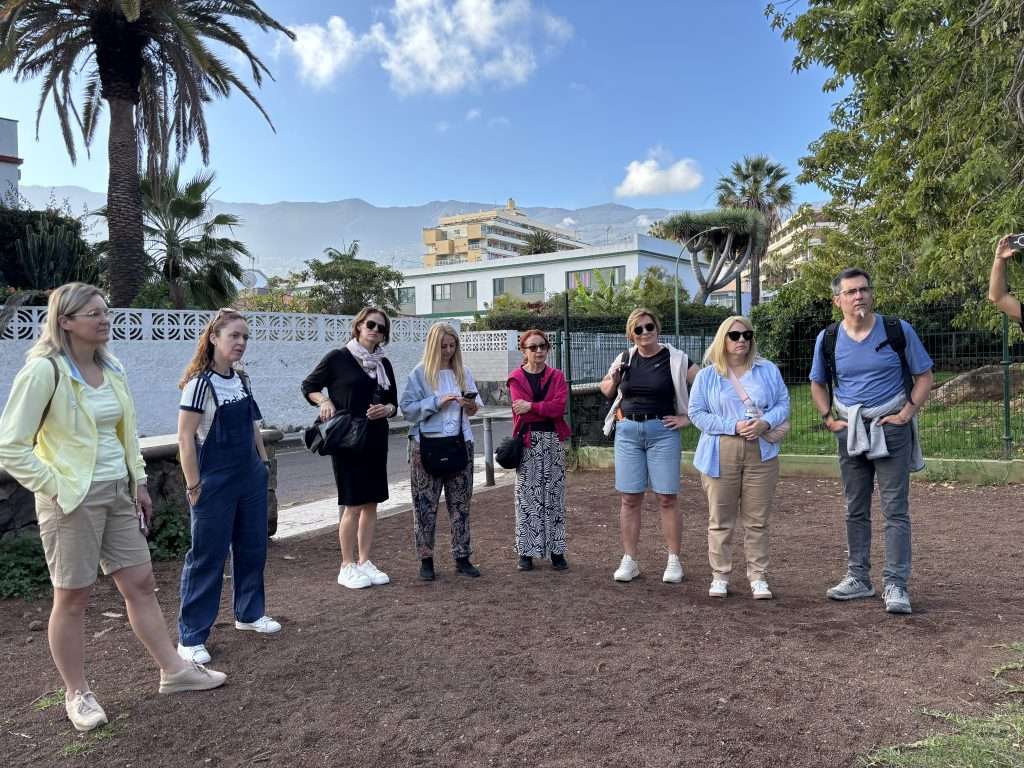
The course began with an introduction to Outdoor Education, highlighting how learning can take place beyond traditional classrooms. Participants explored both natural and urban environments, discovering that meaningful outdoor learning does not require forests or remote locations. Activities were designed to teach subjects such as science, mathematics, art, music, and languages through observation and interaction with surroundings.
A significant part of the training focused on practical activities in local parks, where participants tested games and teaching tools. These esperienze pratiche inspired them not only to adopt new ideas but also to create their own outdoor activities.
The course also introduced Non-Formal Education (NFE), an approach centred on experiential learning. By guiding students through structured reflection, teachers can help them connect new knowledge to real-life situations and apply it effectively.
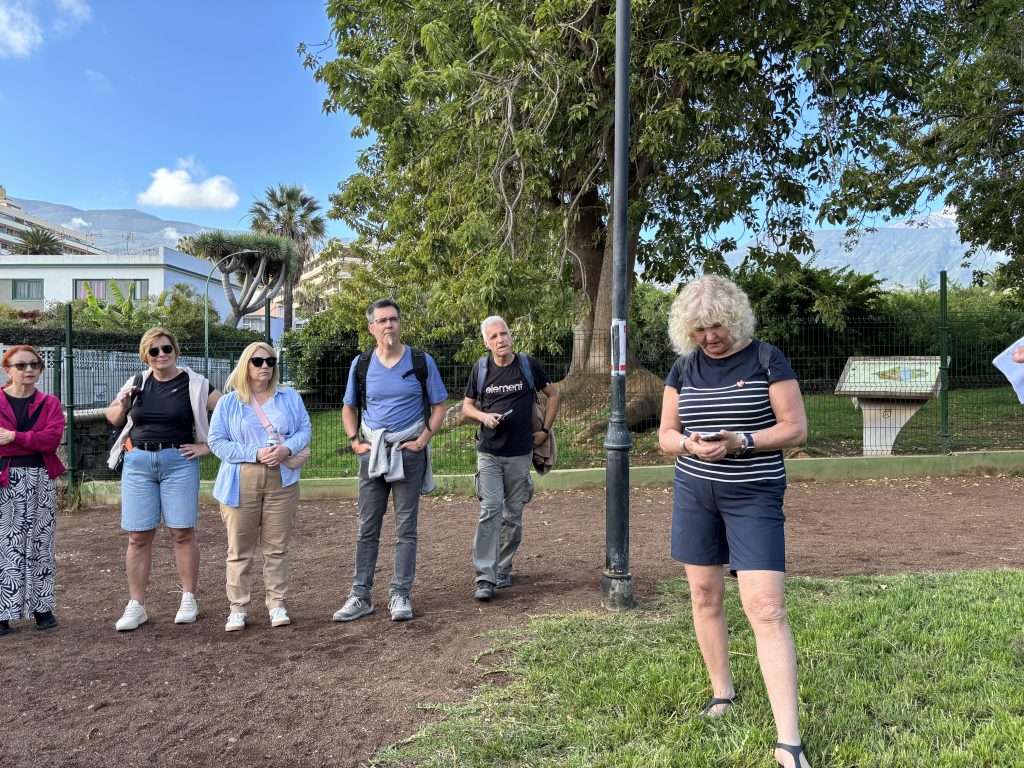
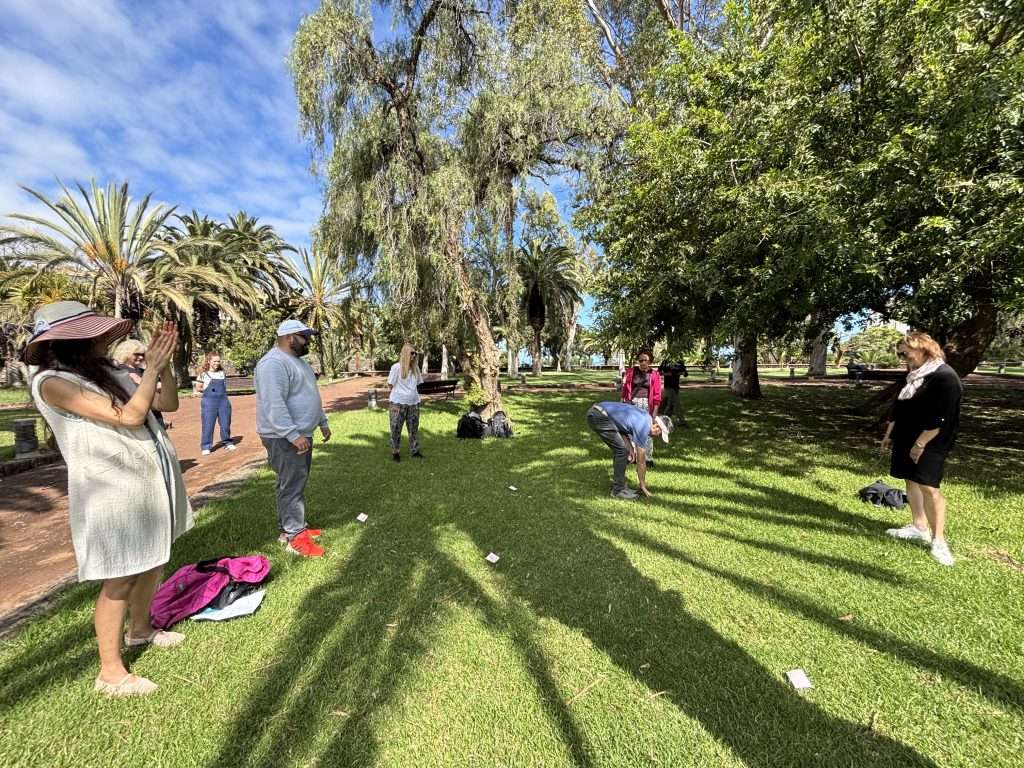
In the final stage, participants designed their own outdoor lessons tailored to their students’ age groups, subjects, and learning objectives. After presenting their plans, they received feedback to refine their ideas. This process demonstrated the effectiveness of experiential outdoor learning and equipped participants with practical skills to implement it in their classrooms.
Overall, the course showed that learning can happen anywhere—not just within the walls of a classroom.
Scopri di più su questo corso Qui.
Where this course took place: Erasmus courses for teachers in Tenerife
Planning your own Erasmus+ course? Scarica il catalogo corsi 2026-2027
 English (UK)
 Español
 Italiano
 Deutsch
 Română
 Български
 Čeština
 Ελληνικά
 Polski
 Português
 Français