Building truly inclusive educational environments requires teachers to recognise gender-related issues and actively foster a climate grounded in respect, understanding, and equal treatment for everyone. During this intensive one-week training course, educators and school professionals took part in collaborative workshops and hands-on activities centred on gender awareness and the prevention of discrimination linked to gender.
Il corso “Preventing Gender-Based Discrimination and Promoting Gender Inclusiveness in the Classroom” was held in Tenerife da 03/05/2026 to 09/05/2026. Participants all came from GO! Scholengroep Brussel in Belgium, including Sascha, Jochen, Stef, Ines, Serge, Dewi, Katia and Sarah.
The programme began with introductory sessions aimed at distinguishing concepts such as gender identity, biological sex, sexual orientation, and gender expression. Working together in groups, participants examined real-life school scenarios connected to gender issues and reflected on the possible effects these situations may have on students’ emotional health, engagement in learning, and long-term educational success.
Throughout the week, the participants explored how gender stereotypes and social expectations can influence students’ self-esteem, academic performance, and freedom of expression. Through activities based on the principles of Intersectionality theory, educators discussed themes including privilege, bias, stereotypes, and discrimination, while analysing how these mechanisms interact and how schools can play an active role in challenging them.
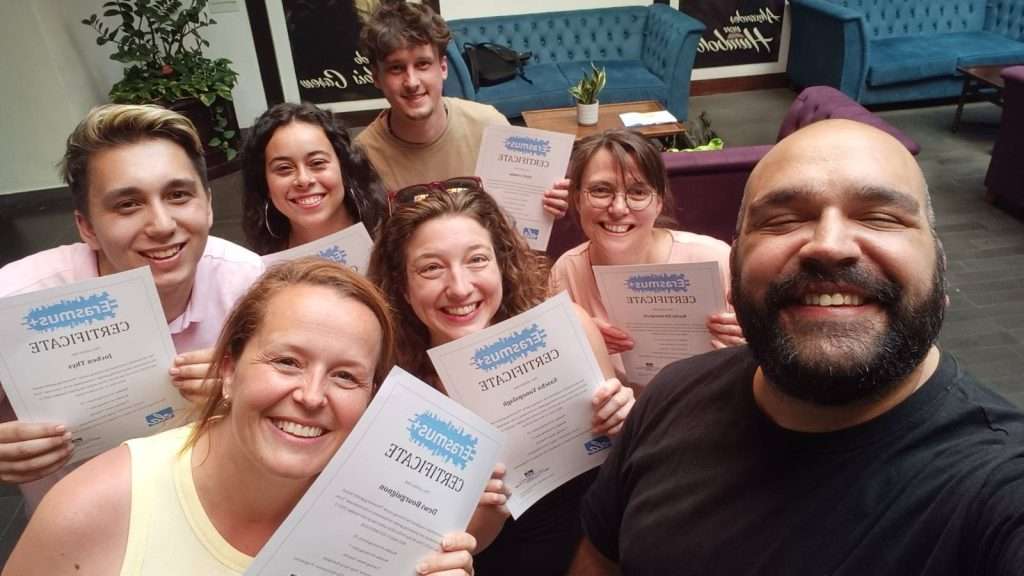
The central part of the training addressed topics related to gender-based discrimination, sexual harassment, and sexual violence within educational settings. Participants also examined the notion of rape culture and exchanged ideas on practical ways to introduce the concept of consent in schools as part of prevention and awareness-raising initiatives.
The programme also highlighted the emotional dimension of inclusion through an exploration of Daniel Goleman’s key components of emotional intelligence. By participating in interactive exercises focused on identifying and communicating emotions, teachers tested cooperative learning methods intended to encourage empathy, constructive communication, and attentive listening among learners.
During the final sessions, participants focused on concrete strategies for developing more inclusive classroom environments. The course concluded with a collection of practical recommendations, ready-to-use classroom activities, and a comprehensive handbook presenting best practices to promote gender equality and inclusiveness across a variety of educational contexts.
Scopri di più su questo corso Qui.
Where this course took place: Erasmus courses for teachers in Tenerife
Planning your own Erasmus+ course? Scarica il catalogo corsi 2026-2027
 English (UK)
 Español
 Italiano
 Deutsch
 Română
 Български
 Čeština
 Ελληνικά
 Polski
 Português
 Français