Nowadays, schools and educational programs are welcoming a wide variety of people whose socio-cultural backgrounds are very diverse. To help students adjusting to a new cultural environment, on the one hand, and to model critical and open minds valuing and celebrating diversity rather than rejecting it, on the other, is one of the biggest challenges for teachers.
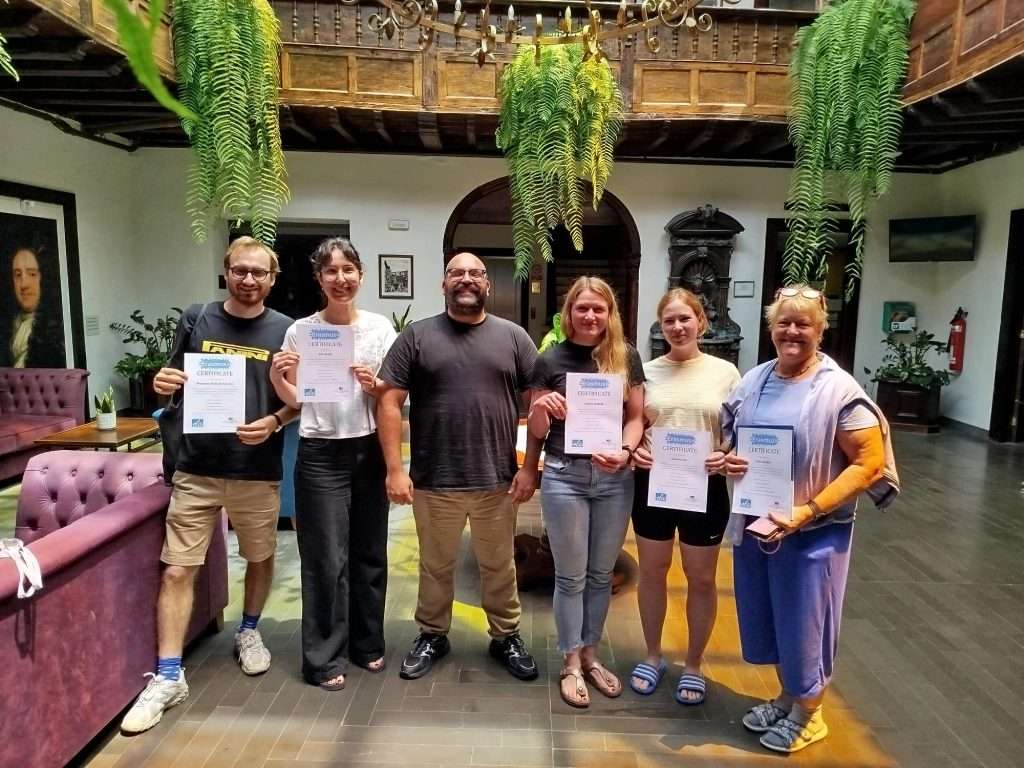
Новото издание на курса “Intercultural learning and cultural diversity in the classroom” се проведе в Тенерифе от 14/06/2026 to 20/06/2026. The participants came from all across Europe, with Valerie and Hannah from Wolfgang-Borchert-Schule in Germany; Petra from GGSD Pflegefachschule Miesbach in Germany; Filiz from IGS Betzdorf-Kirchen Secondary School in Germany; and Francesco from NIA в Италия.
The course began by emphasizing the importance of critically reflecting on the meaning of key concepts and terminology. Together, participants worked to develop a shared understanding of what “intercultural learning” represents and examined the distinctions between “multicultural,” “cross-cultural,” and “intercultural” approaches. This process encouraged greater awareness and precision when describing and interpreting interactions among people from different cultural backgrounds.

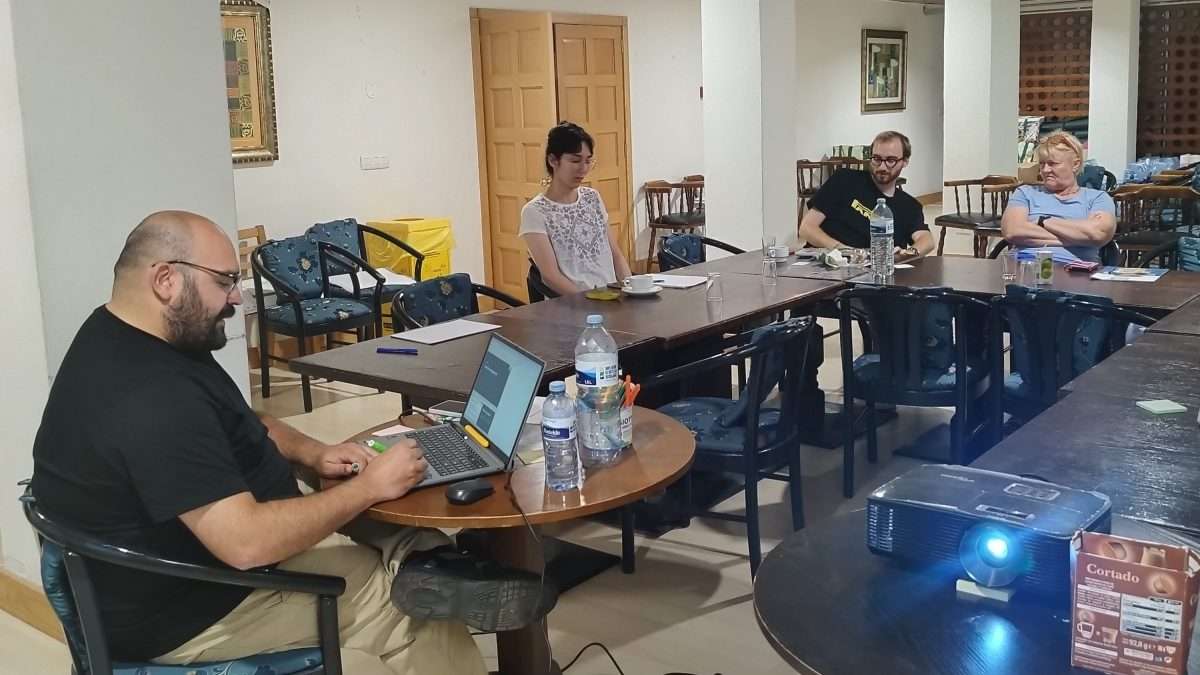
Throughout the course, participants explored the strong connection between culture and education. Through a variety of activities, they became more conscious of the ways cultural values and perspectives can influence teaching methods and learning preferences. These exercises encouraged reflection on the sensitivity and awareness educators need when addressing cultural dynamics that may emerge in the classroom environment.
A further area of exploration focused on the concept of identity as a gateway to understanding diversity. Through a visual and reflective activity, participants examined different aspects of their own identities and considered how identity is shaped by and connected to culture. This process provided a foundation for deeper discussions about diversity, belonging, and individual experiences.
Participants then took part in a storytelling activity centered on stereotypes. Together, they explored the mechanisms behind the cycle of stereotyping and reflected on how stereotypes can evolve into prejudice and discrimination. Discussions highlighted how these processes often reinforce one another, creating a self-perpetuating cycle. Inspired by a TED Talk presented during the course, participants reflected on the idea that repeatedly portraying people through a single narrative can shape perceptions and limit understanding of their true complexity.
The final theme addressed during the course was inclusion. Participants first engaged in simulation activities designed to explore the challenges and opportunities of intercultural communication. These exercises encouraged them to question assumptions and identify common ground across cultural differences. Additional group activities focused on the concepts of belonging and empathy. The collaborative challenges demonstrated how similar activities can be adapted to different subjects and classroom contexts, helping students recognize the value of every individual’s contribution while developing empathy and respect for the diverse experiences and needs of their peers.
Научете повече за този курс тук.
Where this course took place: Erasmus courses for teachers in Tenerife
Planning your own Erasmus+ course? Изтеглете каталога с курсове за 2026-2027
 English (UK)
 Español
 Italiano
 Deutsch
 Română
 Български
 Čeština
 Ελληνικά
 Polski
 Português
 Français