Teaching languages today means working in a space where communication is no longer limited to the classroom. Students write, speak, and interact across platforms and formats every day and teachers are increasingly expected to meet them there. The challenge is not just using technology, but using it in a way that genuinely supports learning.
The latest edition of the course “Teaching languages in the digital era: the best apps, AI tools and ICT solutions for learning languages” took place in Bolonia z 15/03/2026 do 21/03/2026. The training brought together participants with diverse teaching backgrounds, including Els from Sint-Ursula Instituut in Belgium; Marja-Leena and Tiia from Savon koulutuskuntayhtymä in Finland; Silvia from EOI a Distancia de Canarias in Spain; Silvia from FOSBOS Regensburg in Germany; and Hans and Gro Helene from Hvam Upper Secondary School in Norway. Over the course of the week, they explored practical ways to integrate digital tools and AI into language teaching, always with a focus on student engagement and meaningful learning.
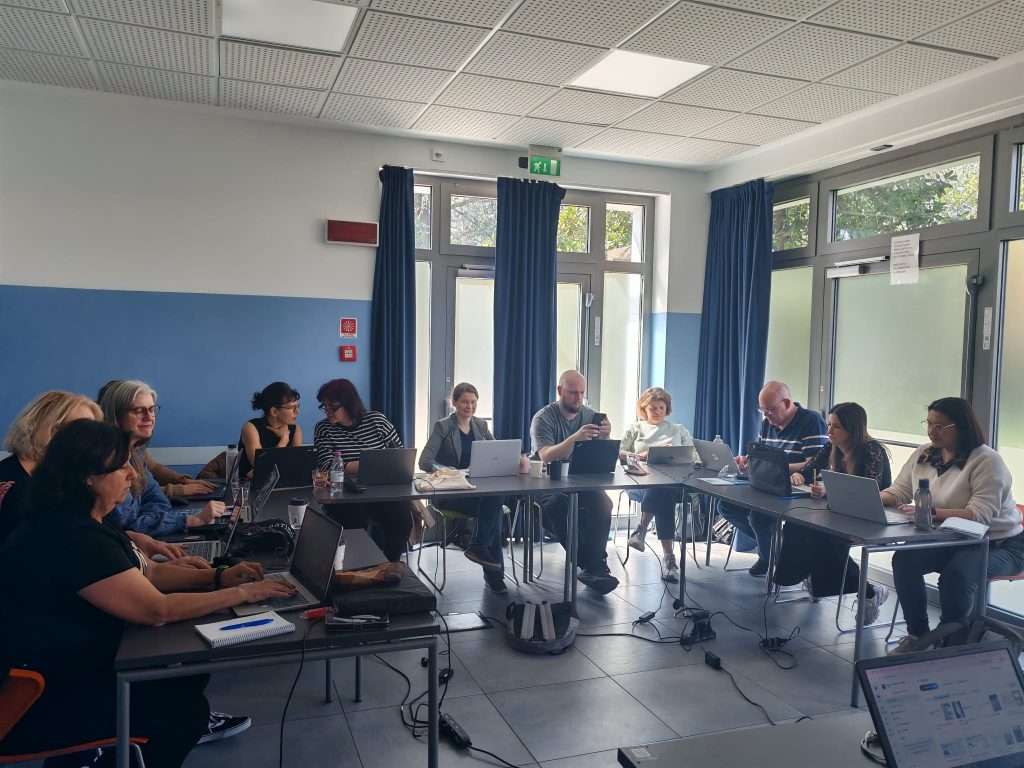
The week began on Monday with introductory activities that allowed participants to get to know each other’s teaching contexts and share their experiences. This created a collaborative atmosphere from the start. The group then explored the use of digital boards to promote student participation, experimenting with ways to create interactive and varied activities. This first session also introduced a broader reflection on how AI-powered and ICT tools can support the development of different language competences, in line with the Common European Framework of Reference (CEFR).
On Tuesday, the focus shifted to writing skills and the role of AI as a support tool. Participants worked on revising grammar, experimenting with different writing styles and tones, and comparing AI-generated texts with human writing. This process helped them better understand both the potential and the limitations of these tools. By actively testing and challenging them, participants also gained insight into how to guide students in using them critically and responsibly. The day also included activities such as online debating and interpreting simple reports and visual data, connecting language learning with real-life communication tasks.
Wednesday was dedicated to formative assessment and reading activities. Participants explored different ways to create interactive quizzes that allow teachers to monitor progress while keeping students engaged. At the same time, they worked on structuring online reading and comprehension tasks that encourage active involvement rather than passive reading. The aim was to design activities where students interact with content, reflect on meaning, and develop their understanding step by step.
On Thursday, attention turned to presentations and how to make them more interactive in the language classroom. Participants experimented with different approaches that allow learners to actively contribute, respond, and engage with the material in real time. This shifted the idea of presentations from a one-way delivery to a more participatory experience, where students play a central role.
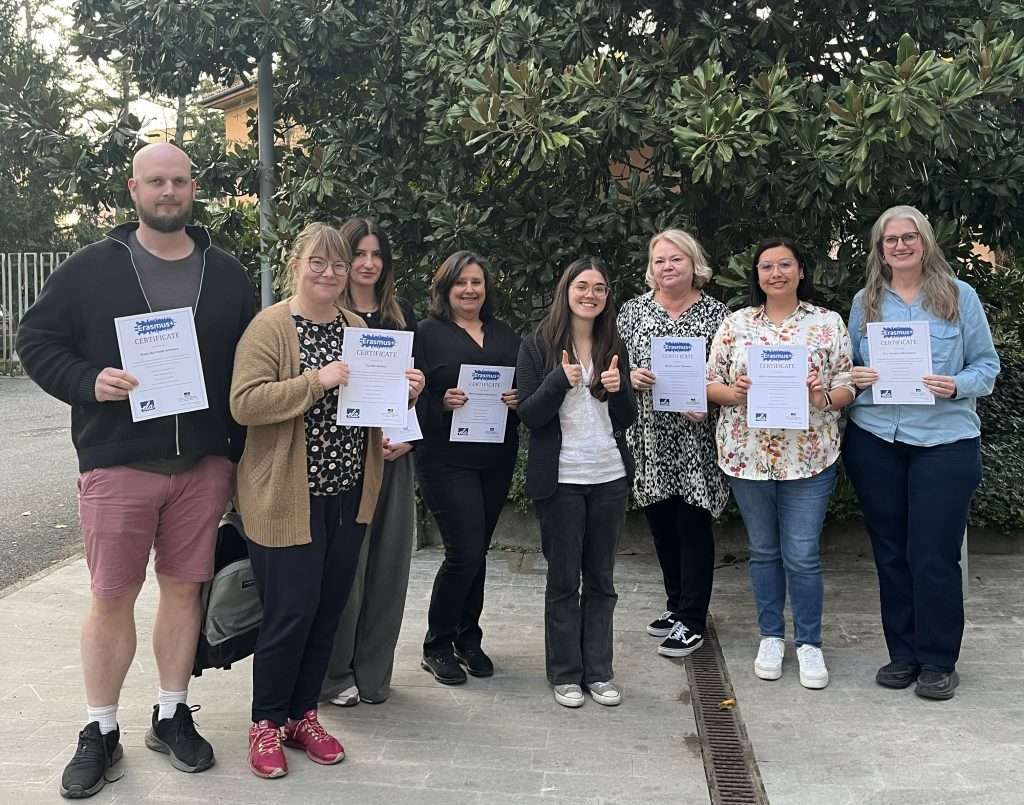
The final day, Friday, focused on listening and speaking skills, exploring tools and strategies to create more opportunities for oral interaction. Participants worked with activities that simulate conversations, as well as audio-based tasks that support listening comprehension. They also explored how to design simple conversational agents and interactive activities for different learning purposes. The week concluded with participants bringing together what they had learned to design their own activities, combining different approaches in a practical and adaptable way.
By the end of the course, participants had not only expanded their knowledge of digital tools, but also developed a clearer understanding of how to use them with intention. The experience highlighted the importance of experimentation, collaboration, and reflection, showing that technology becomes truly valuable when it is used to support meaningful learning and student involvement.
Dowiedz się więcej o tym kursie Tutaj.
Where this course took place: Erasmus courses for teachers in Bologna
Planning your own Erasmus+ course? Pobierz katalog kursów 2026-2027
 English (UK)
 Español
 Italiano
 Deutsch
 Română
 Български
 Čeština
 Ελληνικά
 Polski
 Português
 Français